Tools · The complete guide
Upholstery tools: the complete guide
In short: the essential upholstery tools are a staple gun (ideally pneumatic, with an air compressor), an upholstery hammer and tacks, a ripping chisel, mallet and tack lifter for stripping, a webbing stretcher, a regulator, curved and straight needles, pins, and good upholstery scissors. A sewing machine able to handle thick fabric becomes essential as soon as you sew piping or cushions. Start with the stripping tools, a staple gun and scissors, and add the rest as your projects grow.
The weight of a good hammer in the hand. The click of a pneumatic staple gun finding its depth. A regulator worn with a groove exactly where your fingers rest. For anyone who spends real time at a bench, tools become extensions of the hands.
Find your tool
What do you need the tool for?
Every tool has a specific job: the wrong one slows you down, damages the frame or compromises the result.
To fix
Staple guns, hammer, tacks
With the compressor and the right staples.
To strip and web
Manual tools, stretcher, pliers
The demolition kit and the webbing tension.
To shape and sew
Regulator, needles, machines
Sewing machine, overlocker and button press.
To cut
Scissors and cutting tools
Shears, foam cutter, seam ripper.
Inside and outside
Materials and fabric
What goes inside the seat, and on top.
Where to buy
Good suppliers
What to look for, and what to avoid.
To fix
Staple guns, compressor, hammer and tacks
Staple gun
The most-used tool in modern upholstery. Electric, pneumatic or manual, each has its place depending on the volume of work and the frame. The staple size matters as much as the gun: too short and it will not hold, too long and it splits the wood or goes through a thin rail.
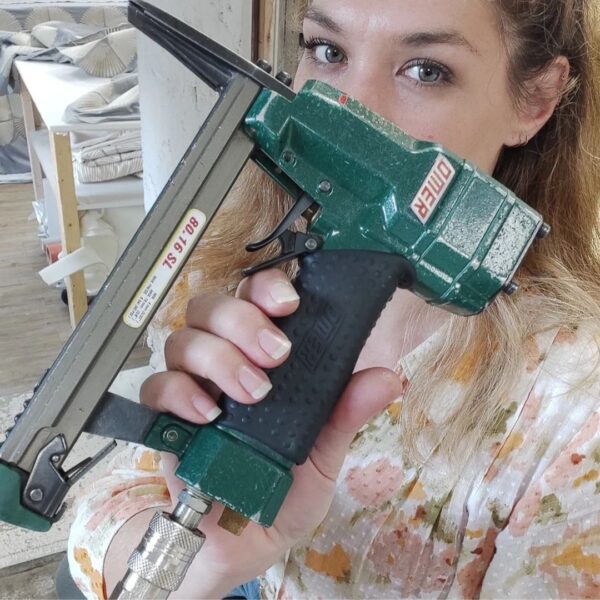
Best Staple Guns for Upholstery
Air compressor
Paired with a pneumatic staple gun, it is the professional standard for regular upholstery: faster, more consistent and far less tiring on a long project. Compressor size, pressure settings and the gun to pair with it all matter.
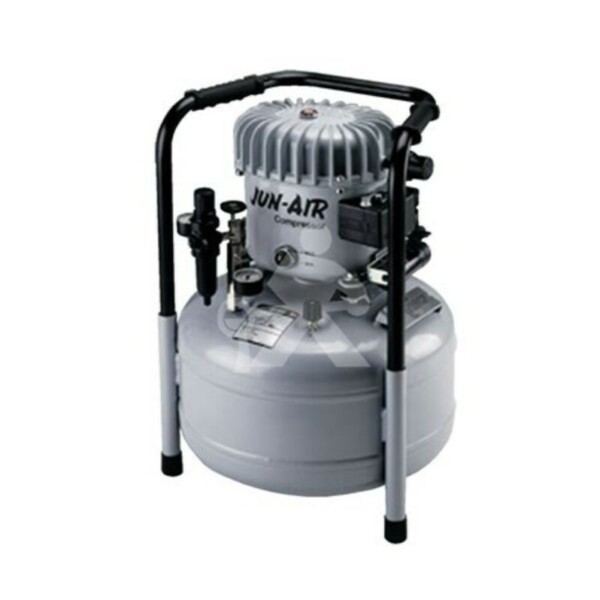
Which air compressors for upholstery ?
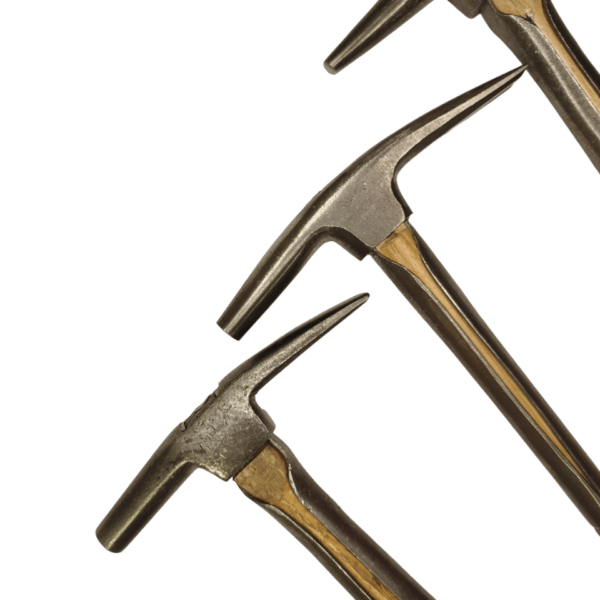
Upholstery hammer
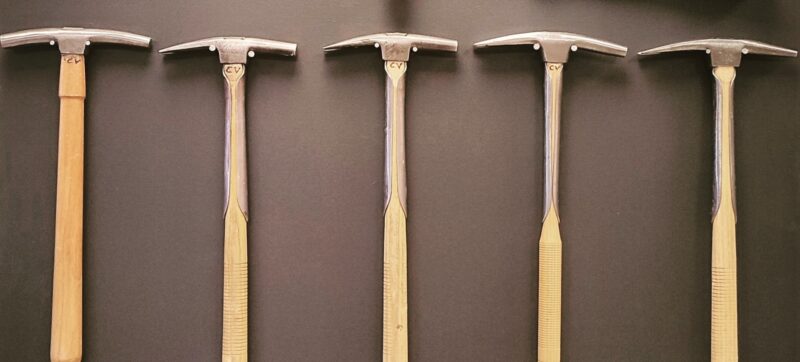
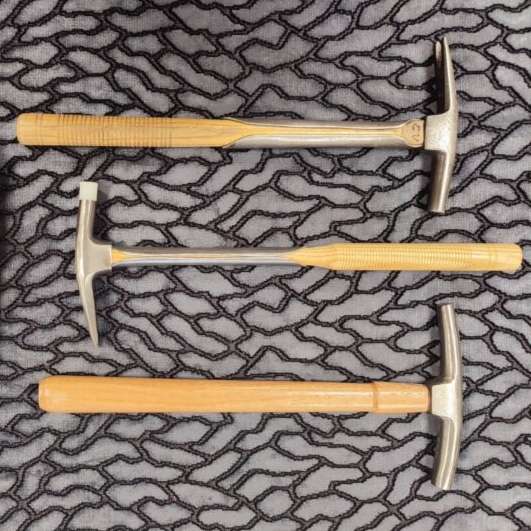
Lighter and more precise than a carpenter’s hammer, for driving tacks, setting springs and working in tight spaces without damaging the frame or the fabric. A magnetic head helps position small tacks: one of those details that makes the work faster and cleaner.
Tacks
Sizes 10 and 12 mm for fabric · 14 mm for spring twine · 16 mm for heavy-duty fixing
Used throughout traditional upholstery: fixing webbing, securing twine, temporary tacking fabric before final fixing, and much more. Using the wrong size is a common beginner mistake with real consequences.
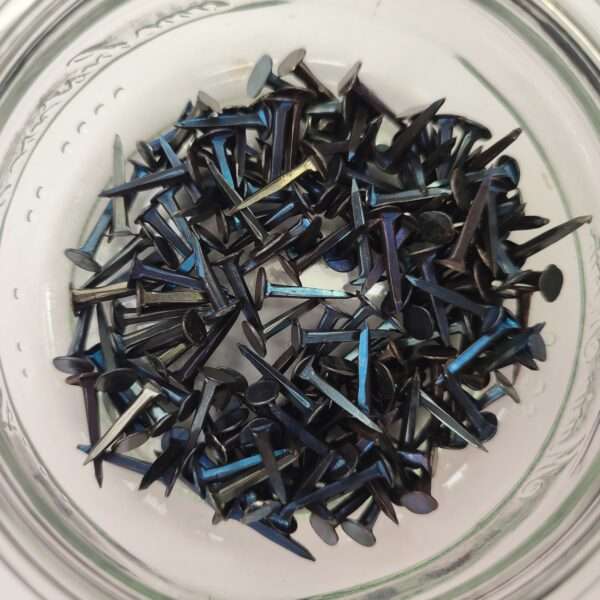
Tacks: everythings you want to know about them
Staples
Staples have largely replaced tacks for fabric in modern upholstery, but they are not all equal: gauge, crown width and leg length affect holding power and compatibility with the gun. Cheap or mismatched staples are one of the most common causes of fabric pulling away from the frame. More on the staple gun page.
To strip and web
Manual tools, webbing stretcher and pliers
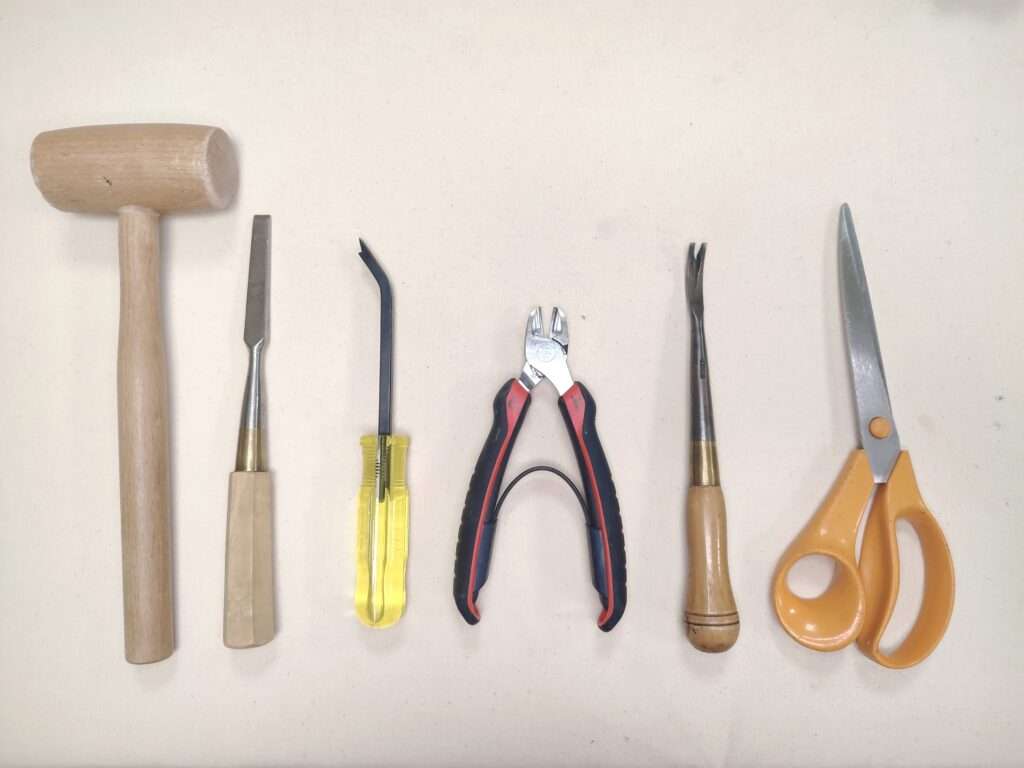
Manual tools
A handful of specialist tools with no real substitute: a tack lifter and mallet for stripping, staple removers and ripping chisels for the demolition stage, and spring stretchers for sinuous springs. Simple, essential, and worth a little time learning to use correctly.
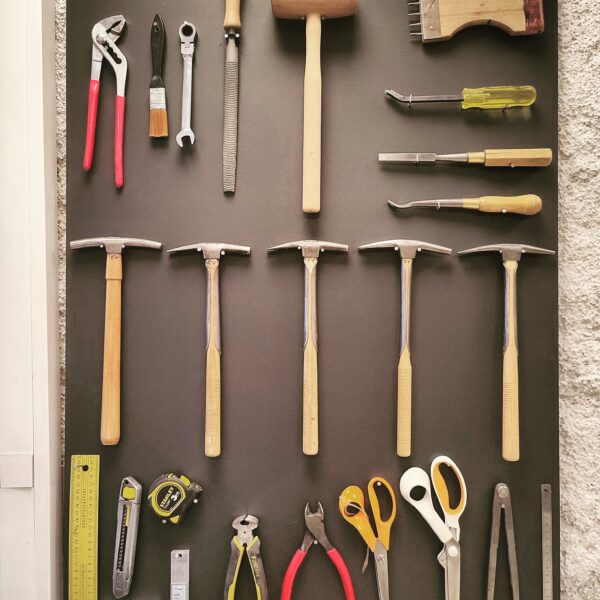
Basic manual tools for upholstery
Webbing stretcher
It tensions jute or elastic webbing before it is fixed. That tension is the base of the whole seat: too loose, and everything above it sags. From the traditional wooden paddle to modern lever stretchers, each suits a way of working. See the webbing stretchers guide and the webbing tutorials.
Pliers
Upholstery pliers grip and pull the fabric or the webbing while you fix it, and pull out stubborn staples during stripping. The right jaws make tensioning easier and save your hands.
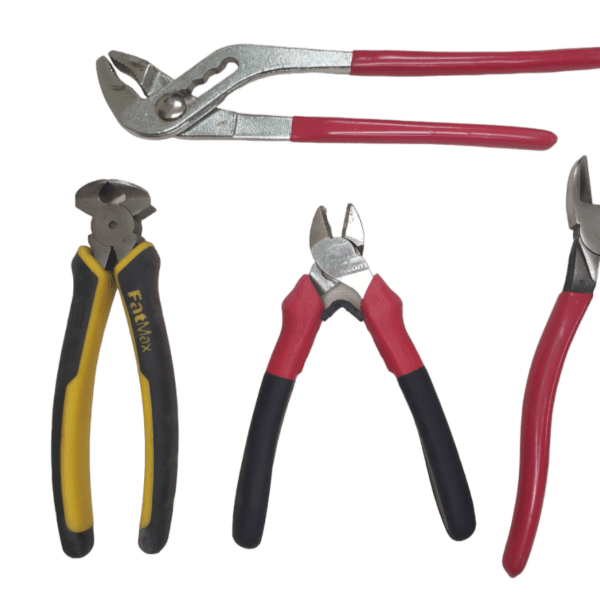
Pliers for upholsterers
To shape and sew
Regulator, needles and machines
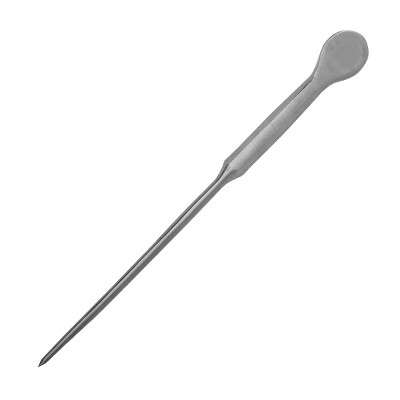
The regulator
A tool non-upholsterers have never seen and professionals use constantly: a long metal spike with a flat, slightly curved end, used to redistribute natural fibre filling through the hessian without removing it. It corrects lumps, adjusts density and refines the shape before stitching the edge roll. No substitute in traditional work.
How to use a regulator
Pins, curved and straight needles
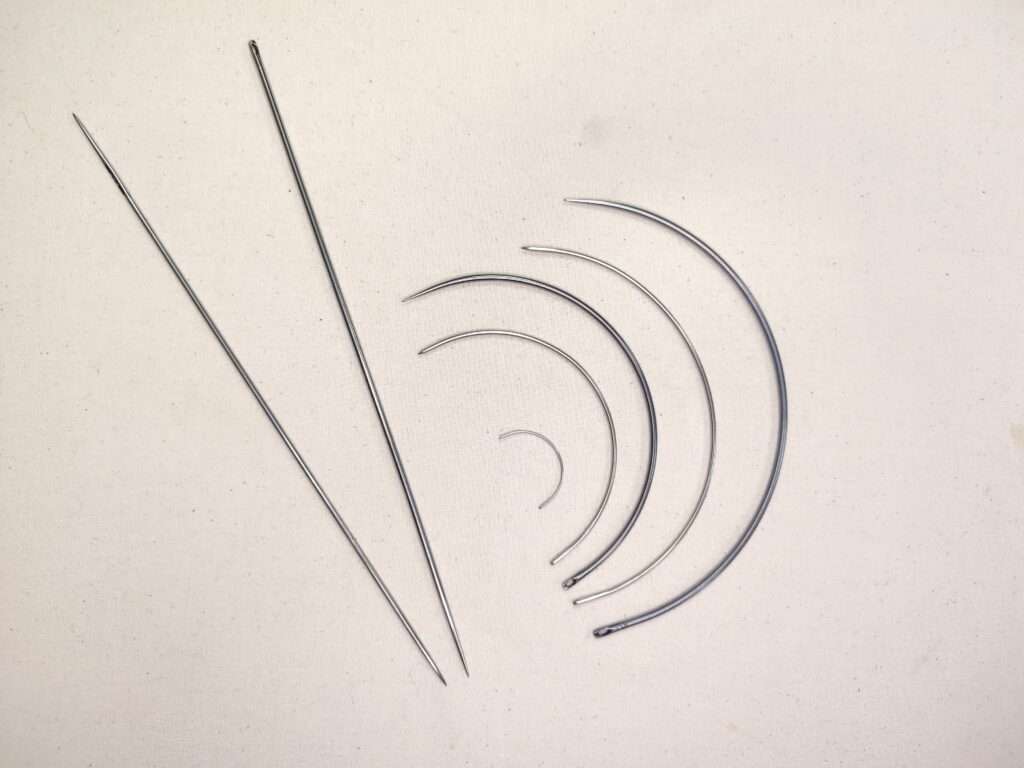
Long mattress needles, curved and straight, typically 10 to 30 cm (4 to 12 in), for bridle ties, edge rolls and through-stitching. The curved needle sews springs to webbing and hessian, and closes covers. Knowing which needle for which task, and handling them safely, is one of the first things to learn.
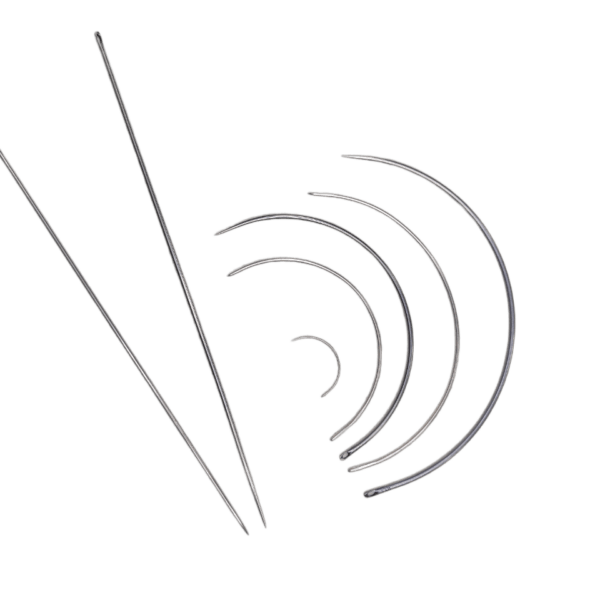
Pins, Needles and Skewers
Sewing machine
Essential as soon as you work with piping, cushion covers or any sewn panel. Not every domestic machine is up to it: upholstery fabric is thick and needs consistent tension and a machine that handles several layers without skipping.
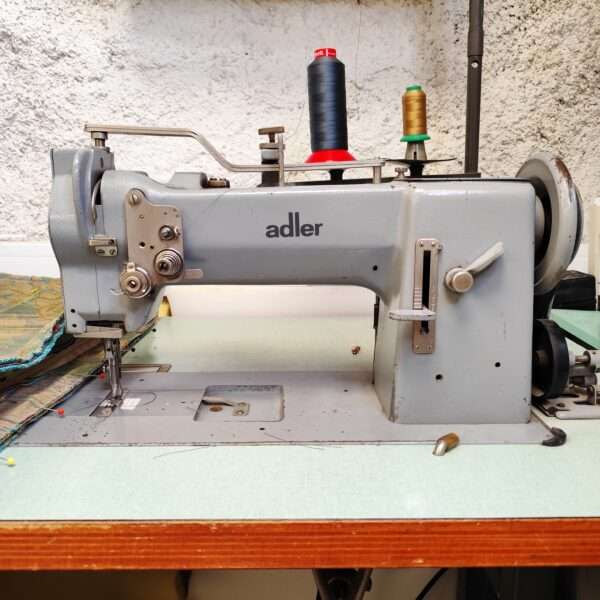
The perfect sewing machine for upholstery work
Overlocker
It trims the raw edge and wraps it in thread in one pass, so it cannot fray. Not needed for fixed covers or piping sewn onto a seat, but essential as soon as you make cushions: an even piping flange and clean inside seams that survive the washing machine.
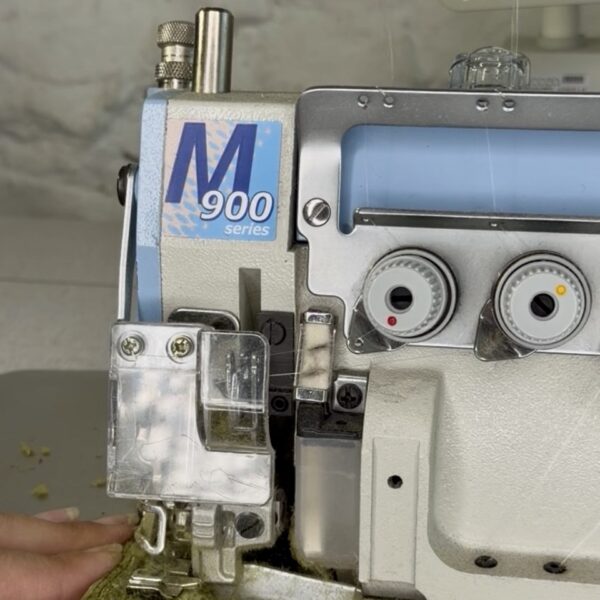
Do you need an overlocker for upholstery?
Button press
It makes self-covered buttons that match the fabric exactly, for deep-buttoned chairs, headboards and cushions. For several sizes, choose a press with interchangeable dies: see the button press guide.
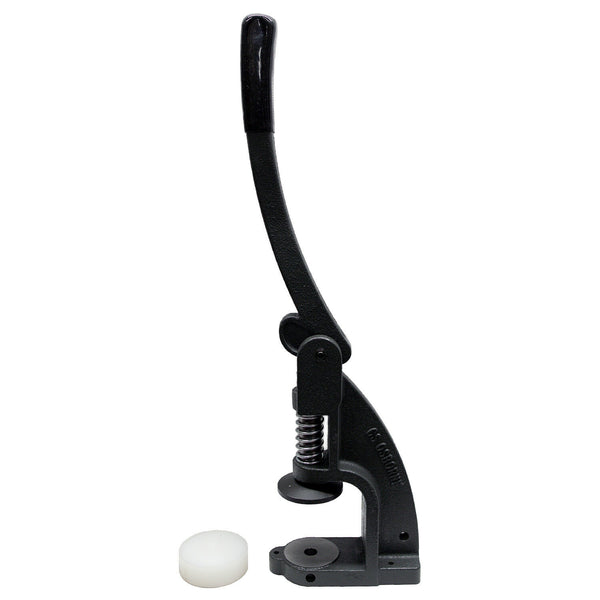
Upholstery button press machine
To cut
Scissors and cutting tools
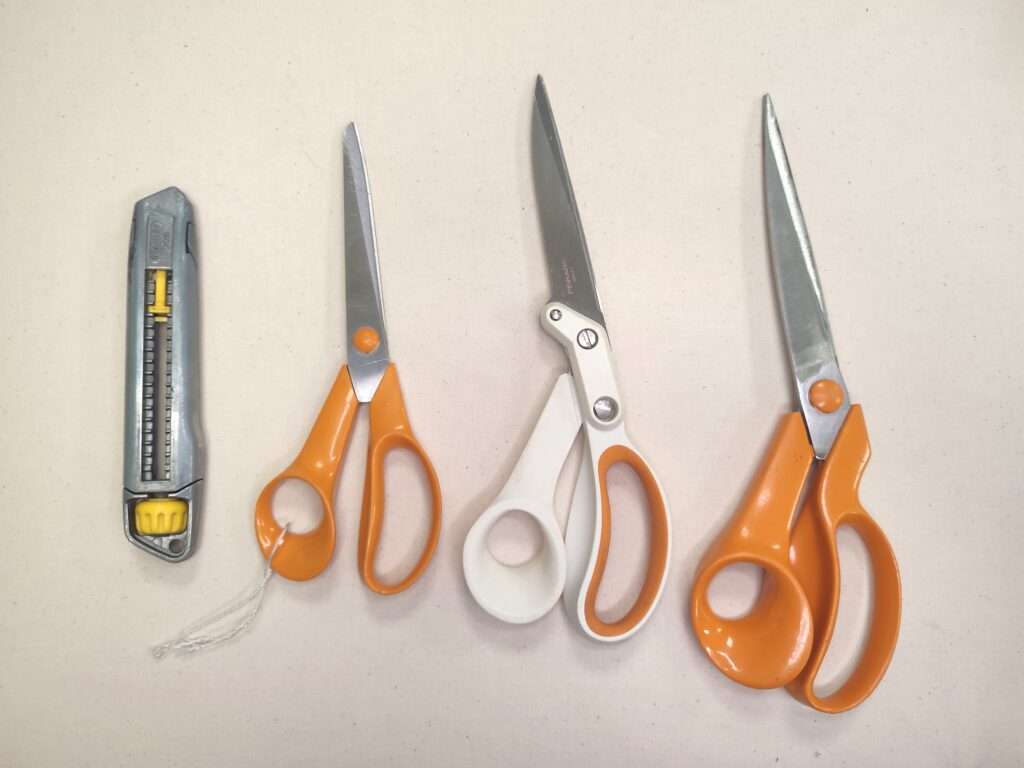
Shears, foam cutter and seam ripper
Good fabric shears, a foam cutter or electric carving knife, and a sharp seam ripper complete the cutting kit. Quality here pays back immediately: cleaner cuts, less fraying, faster work. See how to cut the fabric.
Inside and outside
Materials and fabric
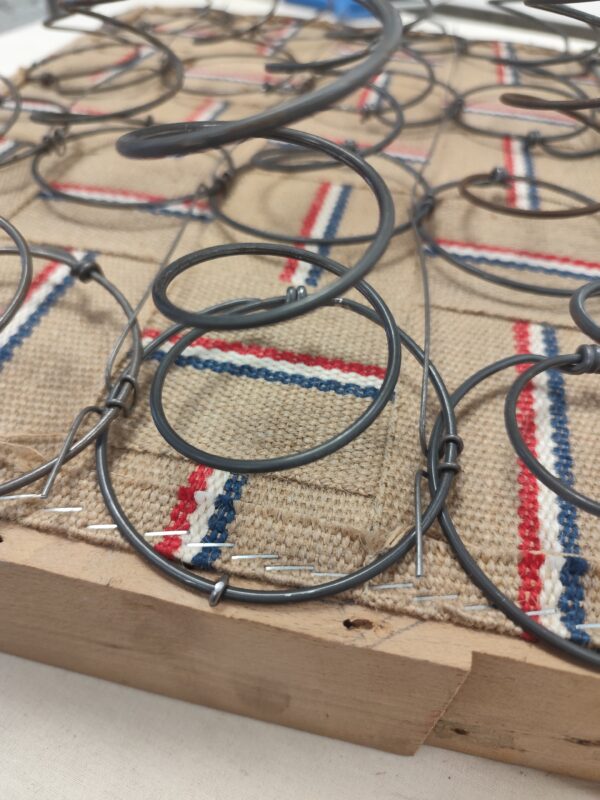
The materials inside the seat
Tools are only half the job. Webbing, springs, twine, hessian, coir, horsehair, foam and wadding each play a precise role, and the right grade matters as much as the right tool. All in the complete guide to upholstery materials.

Upholstery MATERIALS: The Complete Guide
The fabric on the outside
The last layer, the one everyone sees and touches. It has to suit the chair and stand up to daily use: for a seat, at least 30,000 Martindale rubs. Velvet, bouclé, wool and more in the upholstery fabric guide.
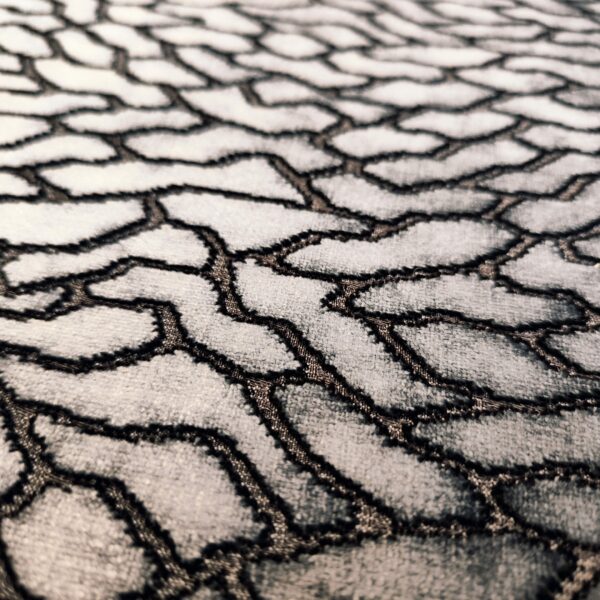
Upholstery Fabric: Complete Guide
Where to buy
Finding good suppliers
Good springs, quality jute webbing, professional foam and proper upholstery fabric are not always easy to find in a hardware or craft shop. Sourcing is part of the skill.
The best source
Specialist upholstery suppliers
For all structural materials (webbing, springs, twine, hessian, tacks, edge roll, natural fibres, foam). They stock professional grades, advise on specifications, and often sell in quantities that suit a single project.
Watch out
What to look for, and what to avoid
The difference is not always visible at first glance. Cheap foam that looks professional collapses within months; synthetic twine that looks like spring twine stretches and fails; thin hessian tears under stitching.
Ordering online
A selection of tools and materials on Amazon
Just starting and want to order a few items quickly, without a trade account? I have gathered the tools and materials I actually use and recommend in my Amazon shop: staple guns, webbing stretchers, springs, needles, twine, all in one place.
Upholstery tools: your questions
What tools do I need to start upholstery?
A staple gun, a tack lifter, a mallet, fabric shears, upholstery pins and a webbing stretcher. A sewing machine becomes essential as soon as you work with piping or cushion covers. See the basic manual tools.
Manual or pneumatic staple gun?
A manual gun is fine for occasional projects but tiring over long sessions. A pneumatic gun with an air compressor is the professional standard: faster, more consistent and much less effort. See the staple gun guide and the air compressor guide.
What is a regulator used for?
To redistribute natural fibre filling through the hessian without removing it: it corrects lumps, adjusts density and refines the shape before stitching the edge roll. See how to use a regulator.
What size tacks should I use?
10 and 12 mm for fabric, 14 mm for spring twine, 16 mm for heavy-duty fixing. See the tacks guide.
Where can I buy professional upholstery supplies?
From a specialist upholstery supplier rather than a hardware store: they stock professional grades and advise on the right specifications. See my suppliers.
What is a webbing stretcher used for?
It tensions the webbing before it is fixed, so the seat stays firm and does not sag. See the webbing stretchers guide.
Which button press should I buy?
For several button sizes, a press with interchangeable dies, plus a die set and a cutter for each size. See the button press guide.
Do I need a sewing machine for upholstery?
Not for every project, but as soon as you work with piping, cushion covers or sewn panels. It needs consistent tension and must handle several thick layers without skipping. See the perfect sewing machine for upholstery.
The Hammer Club
Every tool, in action
The detailed guides, comparisons and supplier recommendations, with step-by-step photo tutorials, many with video, that show how to use every tool and every material on this page.
All my tools and materials, one by one: tools and materials.
Written by Céline Vanier, running her own upholstery atelier by Lake Annecy for more than 15 years.

