
A dining chair or side chair with a drop-in or fixed seat is the easiest way to start upholstery: no complex frame, no tricky angles, just a seat, some padding and a piece of fabric. Depending on its state, you either re-cover it, rebuild the padding, or start again from the webbing. Most seats can be done in an afternoon.
This page helps you work out what your chair needs, then takes you to the right tutorial, from a simple re-cover to a full new seat with webbing and foam.
On this page: Which seat do you have? · What does your chair need? · Re-cover · Webbing · Padding · Pleats and finishes · A padded back? · FAQ
Which type of seat does your chair have?
- A drop-in seat: the seat is a separate frame that lifts out of the chair. You work on it flat on the table, and the chair itself stays untouched.
- A fixed seat: the seat is upholstered directly on the chair frame, so you work on the chair itself.
- A solid wooden seat: there is no webbing, the padding sits on a wooden board.
All three follow the same logic. Only the base changes.
What does your chair need?
Before you strip or cut anything, take a good look at the seat. Is the padding still in decent shape, or has it collapsed? Does the webbing still hold, or does it sag when you press it? Your answers tell you where to start:
- The padding is still fine, only the fabric is worn: you just need a re-cover.
- The seat sags when you sit on it: the webbing needs replacing before anything else.
- The padding is flat or collapsed: you need a new seat, with foam or natural fibres.
To start from the bare frame, see how to strip a chair like a pro.
How do you re-cover a chair seat?
If the padding is still good, you only change the fabric. Choose the tutorial that matches your seat: a solid wooden seat, a drop-in seat, or a seat with a wrap-around cut.
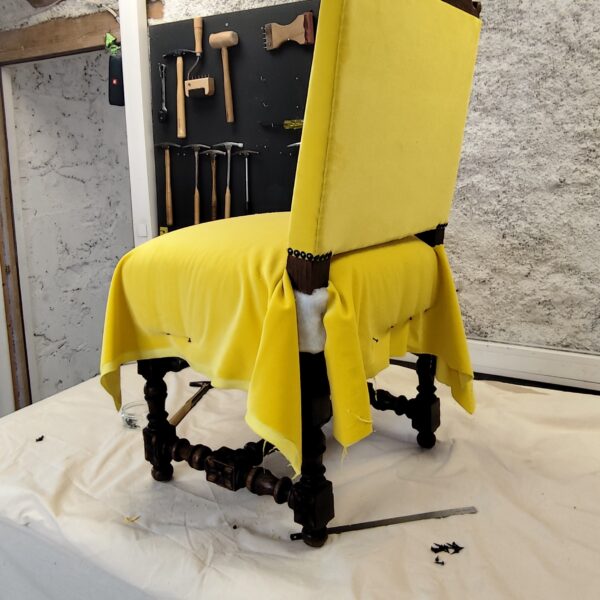
How to upholster a seat with a wrap-around cut
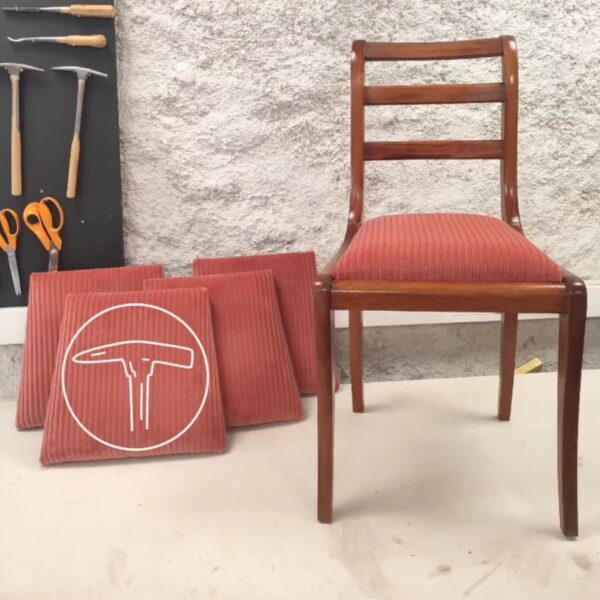
How to cover a drop in seat chair
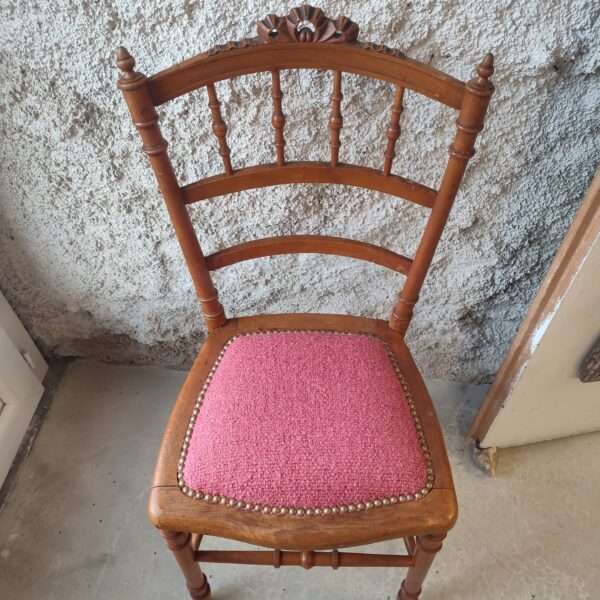
How to cover a chair with a solid wooden seat
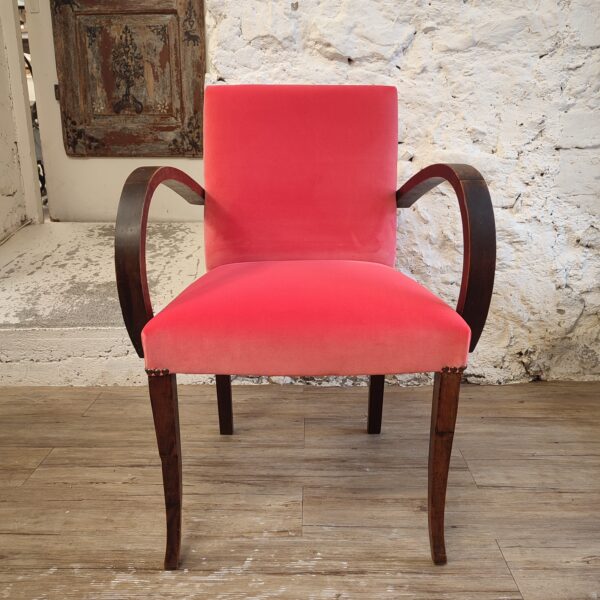
How to cover a modern bridge chair (3 videos tutorials)
Not sure which fabric to choose? My complete guide to upholstery fabric explains what holds up on a seat used every day.
Does your seat need new webbing?
If your seat sags or feels soft and unsupportive, start here. Webbing is the foundation of any seat: there is no point building new foam on a collapsed base. Elastic webbing is the simplest and most practical option for this type of chair; jute webbing is a good choice for a long-lasting seat.
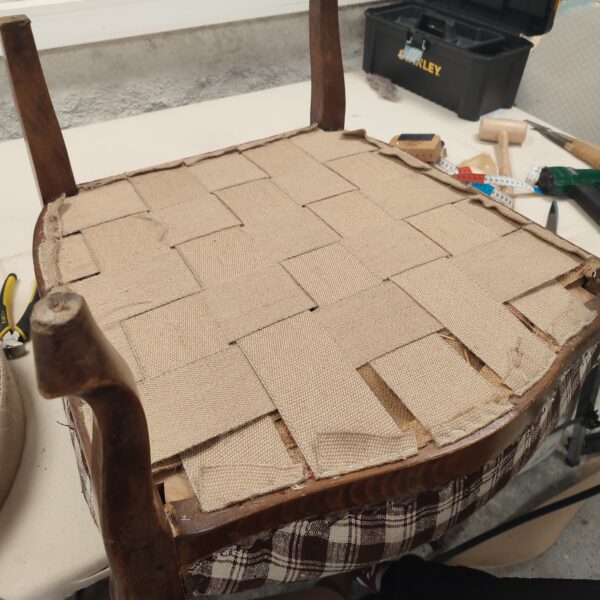
How to plump easily a seat with a new webbing
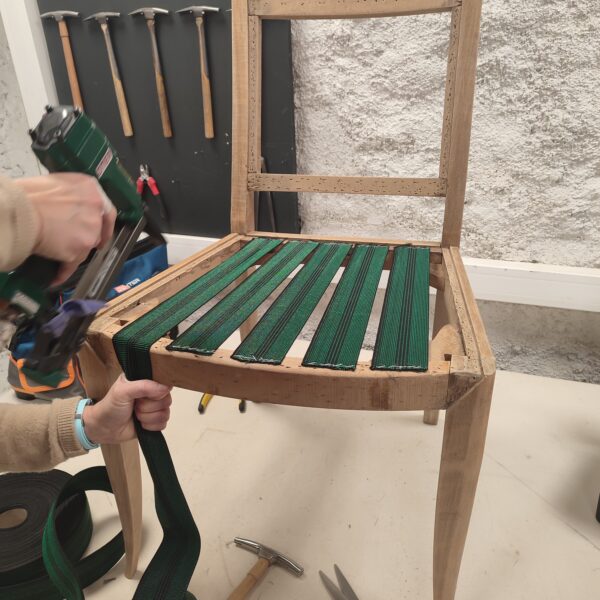
How to web with elastic webbing
For a traditional seat, see the jute webbing tutorial.
How thick should the new padding be?
Once the webbing is in place, or if it is still solid and you only need new foam, you have two options, depending on how much height and comfort you want. My guide which foam for upholstery? helps you choose the density.
Option 1: thin foam, for a low seat
The right choice for a neat, low-profile seat. A thin layer of foam gives a cleaner result on chairs with a shallow seat frame, and it is the easiest version to cover neatly. The tutorial below takes you from the bare frame to the finished seat in one go.
How to pad a chair with a wooden seat using foam
Option 2: thick foam with an edge roll, for a generous seat
For a more generous, rounded seat, use thicker foam with an edge roll. The edge roll defines the shape of the seat and stops the foam from collapsing at the edges over time. It takes a little more work, but the finish is noticeably better, especially on a chair used every day.
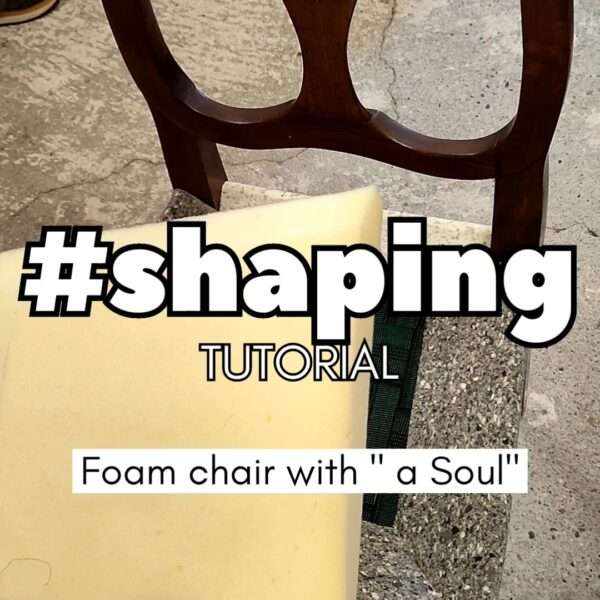
Foam seat with edge roll tutorial
How do you finish the corners?
The corners are what make a seat look professional. Choose the pleat that suits the shape of your seat: a simple pleat on a square-edged seat, a V pleat (tulip pleat) finished with decorative nails, or a V pleat tucked under a frame.
How to create a V pleat (tulip pleat) ending with decorative nails
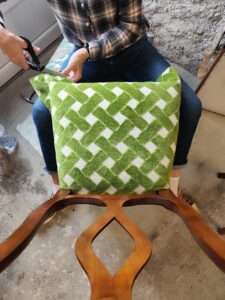
How to do a simple pleat on a square corner
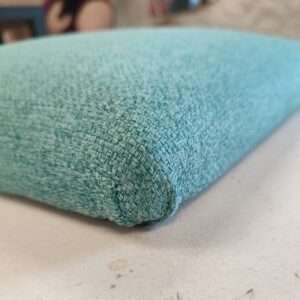
How to create a v pleat (under a frame)
To finish under the seat, add a bottom liner. For a tailored edge, a piping is a lovely first sewing project.
Does your chair also have a padded back?
This page covers chairs where only the seat is upholstered. If the back is padded too, your chair needs its own path:
- A modern chair with wooden arms or a simple padded back: follow the bridge chair tutorials. It is the natural next step after a seat: a little more surface, the same logic.
- A traditional French chair with a curved, padded back: follow the cabriolet chair tutorials.
- A contemporary chair whose seat and back panels unscrew: see the modern chair tutorials.
Frequently asked questions
Is a dining chair a good first upholstery project?
Yes, it is the most accessible one: no complex frame, no tricky angles, and a satisfying result in an afternoon. For a guided start, the beginners guide takes you through three complete projects.
How much fabric do I need for a chair seat?
About 0.70 m (about ¾ yd) of 140 cm (54 in) wide fabric for a chair without an upholstered back. Allow more for a fabric with a large pattern to match.
Do I always need to replace the webbing?
No. Only when the seat sags or the webbing no longer holds when you press it. If it is still firm, keep it and go straight to the padding or the re-cover.
Elastic or jute webbing?
Elastic webbing is the simplest and most practical for a foam seat. Jute webbing is the traditional choice, for a long-lasting seat.
What tools do I need to start?
A staple gun, a tack hammer and good scissors are enough for a first seat. See my guides to basic upholstery tools and staple guns.
Learn with me
All the tutorials on this page are available in full with the Membership, with video and step-by-step photos for every stage. Prefer to learn in person? Try my upholstery classes in Annecy, a great way to get the foundations right from the start.