How to Reupholster a Voltaire Chair: Projects, Materials and Tutorials
| Style | Voltaire armchair, Louis-Philippe period (straight, violin or wing back) |
| Level | Beginner-friendly |
| Traditional padding | 20 hrs |
| Foam padding | 6 hrs |
| Covering & finishing | 8 hrs |
| Fabric | 1.8 m (plain fabric, 140 cm wide) |
| Braid or double welting | 8 m |
| Decorative nails | About 800, 11 mm (if finished with nails) |
A Voltaire chair is a French armchair from the Louis-Philippe period, with a high back, a deep seat, padded armrests and an exposed wooden frame. Upholstered from top to bottom but always showing its wood, it is one of the most common chairs in French homes, and one of the best first projects for learning traditional upholstery.
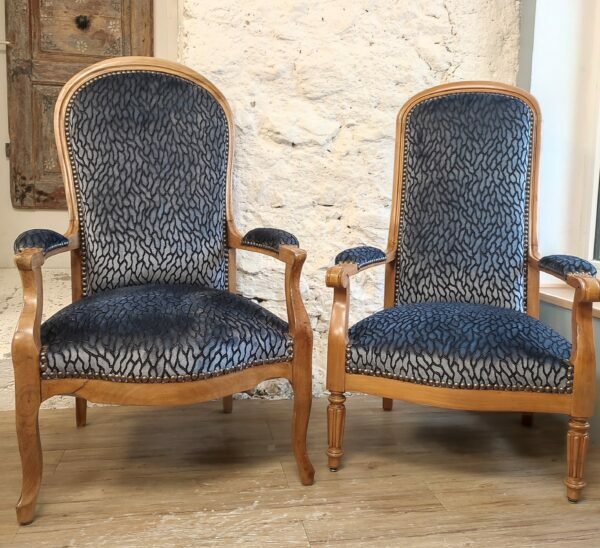
This page gathers everything you need to restore a Voltaire, from stripping the frame to the very last nail: the materials to plan, and every tutorial in the right order, so you can follow along without getting lost. Curious about its history, its three back styles and the fabrics that suit it best? Read the story of the Voltaire chair in the Journal.
How Much Fabric Do You Need for a Voltaire Chair?
For a standard Voltaire in a plain or semi-plain fabric about 140 cm wide, plan 1.8 m of fabric to cover the seat, the inside and outside back and both arms. For the finish, plan 8 m of braid or double welting, or about 800 decorative nails in 11 mm.
- Large pattern repeat: add about 50 cm, more if you want a large motif centred on the back.
- Nails: they usually come in boxes of 1,000, which is perfect: you will always need a few spares when one goes crooked.
- Buy the trim with the fabric: nail heads or braid should either match the fabric exactly or contrast with it on purpose. There is no in-between that looks good.
- Choose a fabric made for seating: a minimum of 25,000 rubs on the Martindale test is a good benchmark for a chair used every day.
Need help choosing? See the upholstery fabric guide.
Is a Voltaire Chair a Good First Project?
Yes. The structure is logical, the work follows a clear order, and there are no tricky angles or mechanisms. There is more surface to cover than on a small chair, but each section is straightforward. The only thing it will not forgive: the exposed wood shows every cut and every finish, so neat work is essential. The best kind of project to learn on.
Traditional or Foam Padding?
A Voltaire can be padded both ways. Traditional padding respects the original construction of a period chair. The modern foam method gives a clean, consistent shape without years of training, and can still recreate the soft, rounded profile that makes a Voltaire so elegant. Choose according to your chair and the result you want.
Voltaire Chair Tutorials, Stage by Stage
Every section of the chair is worked separately, always in the same order. Follow the tutorials below from top to bottom.
Prepare: strip and repair the frame
Skipping frame preparation is the number one mistake with vintage chairs. If the wood is damaged, wobbly or peeling, no fabric will save it. This tutorial covers stripping the old upholstery, reinforcing weak joints, filling cracks, and deciding whether to paint or wax the show wood of your Voltaire.
Webbing and springs
The seat foundation, and the back webbing a tall Voltaire back needs to keep its shape.
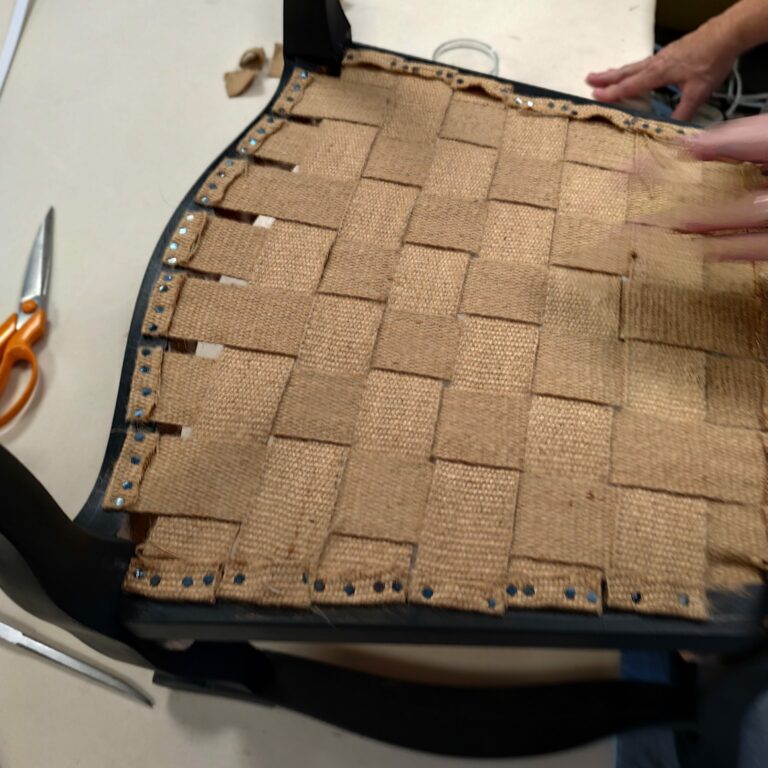
Upholstery techniques tutorials for webbing
Padding with foam: seat
The seat is wide and fairly flat on top, but it must look full and rounded at the front edge. Learn how to build that shape and get a smooth surface, with no lumps or ridges showing through the fabric.
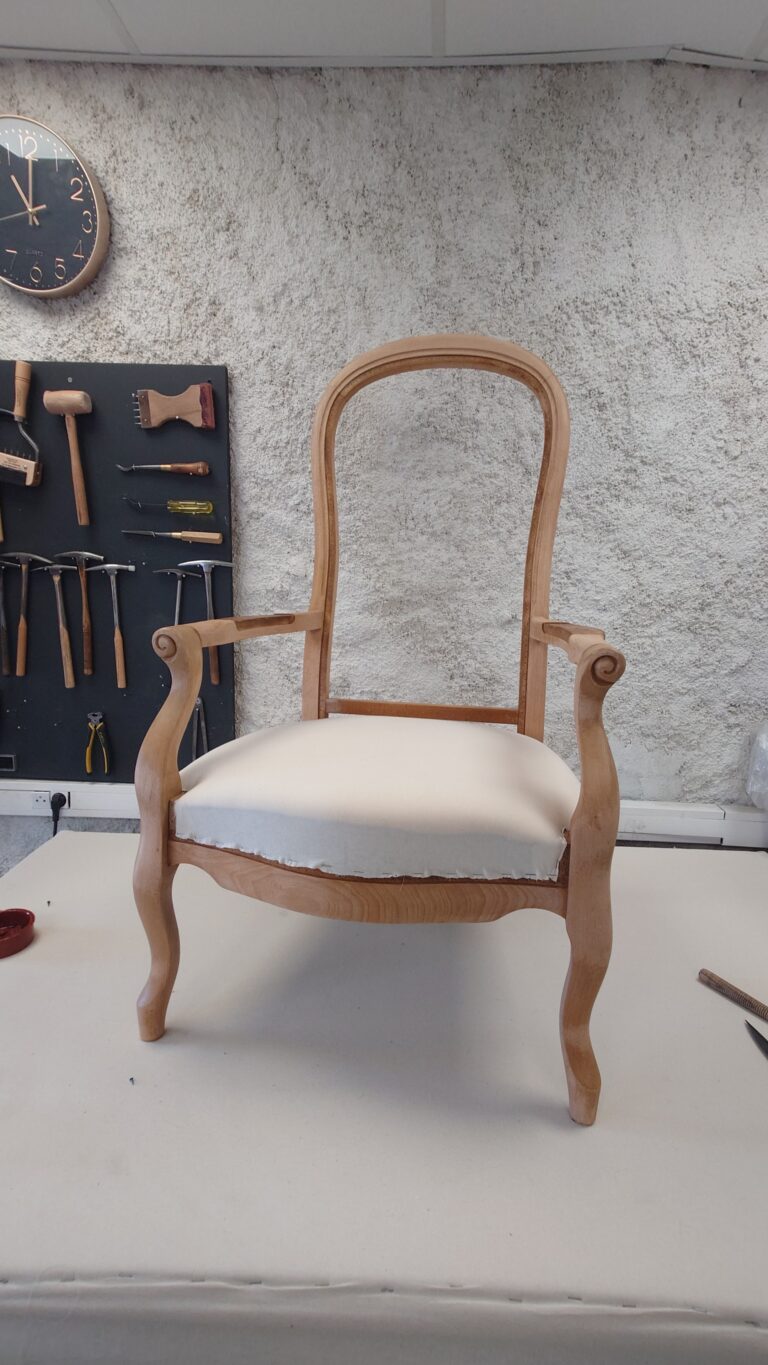
Modern Foam Upholstery with a Traditional Shape: Voltaire Armchair SEAT Tutorial
Padding with foam: back
The inside back must look full and gently rounded, not flat like a cushion glued to a board. The upper corners are where most beginners lose the silhouette of the chair.
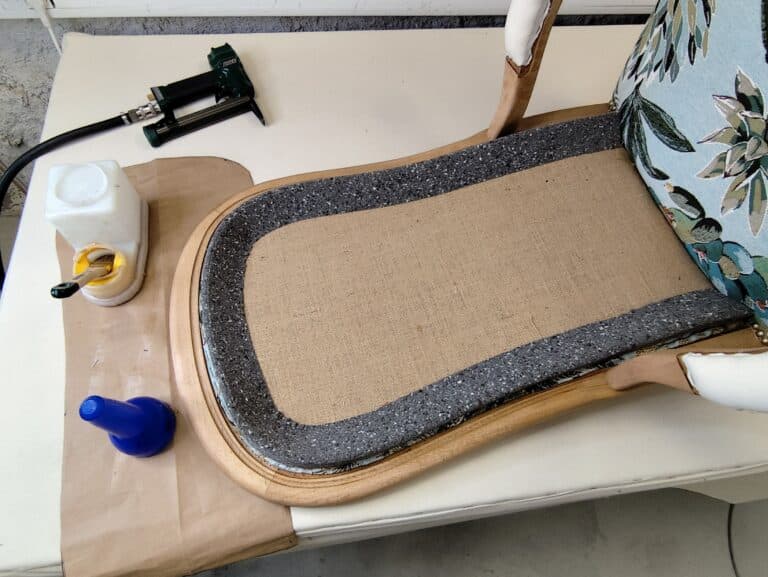
Modern Foam Upholstery : The back of a Voltaire Chair
Padding with foam: arms
Arms are often the part people dread most, but on a Voltaire they are quite forgiving once you understand the structure: the simplest and most reliable method, for a clean result with no puckers at the front post.
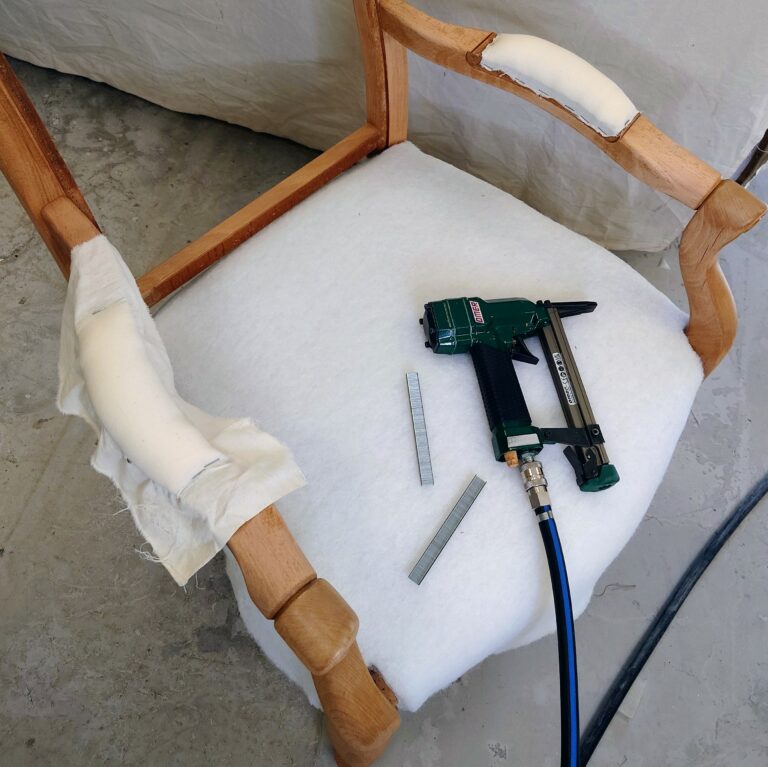
The easiest way to upholster arms with foam
Traditional padding
NOT AVALAIBLE
Covering the seat
Cut on grain, centre the pattern, and handle the slightly curved front corners without a visible pleat. Always cover in the same order on a Voltaire: seat, then inside and outside back, then arms last.
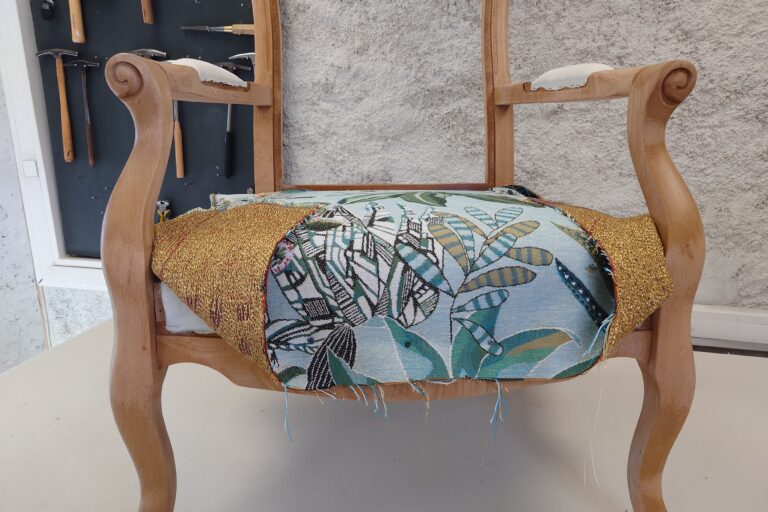
Covering the Seat of an Armchair (Voltaire)
Covering the inside back
The piece everyone sees first. The fabric must follow the curve of the top rail smoothly, and the cuts around the arm uprights are always the trickiest part on a Voltaire.
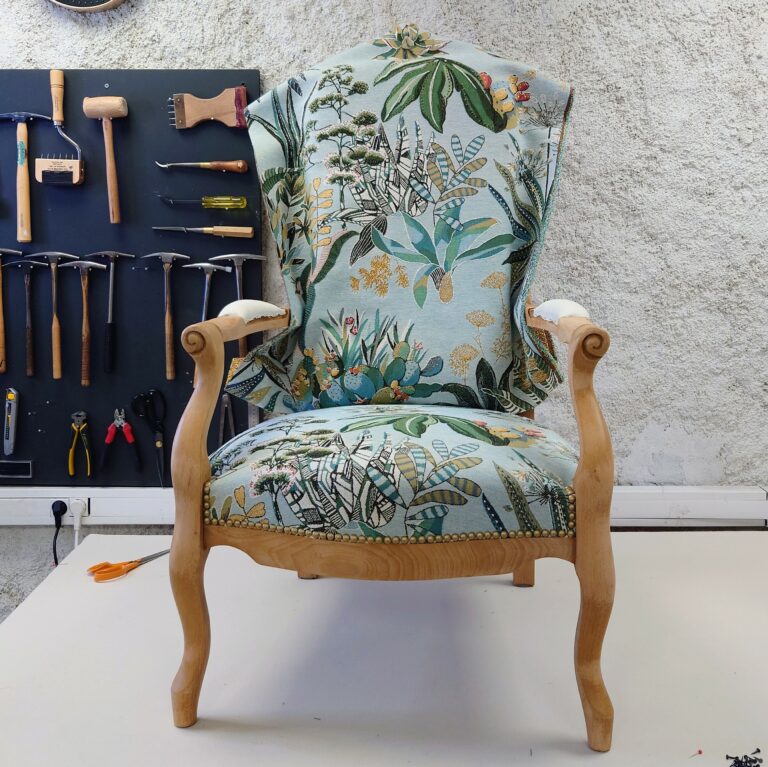
How to cover the back of a Voltaire Chair
Covering the outside back
The last piece of fabric to go on, and the one that gives the chair its finished look from behind: no visible staples, clean folded edges, and a bottom cloth underneath.
Finishing: nails or braid
Decorative nails placed one by one along every edge, or a length of braid or double welting fitted neatly against the wood: this final step is what turns a recovered chair into one that looks properly done. See all the methods in Finishing.
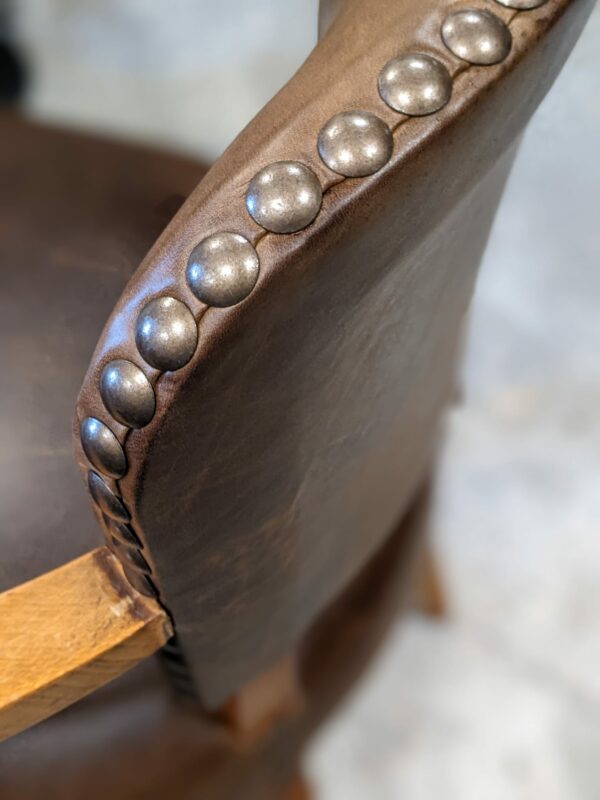
The different ways to finish a seat (with visible wood)
Voltaire Chair: Frequently Asked Questions
How long does it take to reupholster a Voltaire chair?
14 hours with foam, 30 hours the traditional way.
In which order do you cover a Voltaire chair?
Seat first, then the inside and outside back, and the arms last. Check and pin everything before stapling permanently. The outside back always goes on last among the back panels, as it hides the fixings of the inside back.
Braid or double welting on a Voltaire?
Both work. Braid is the classic period finish along the exposed wood; double welting, made from the upholstery fabric, gives a more tailored look. Count 8 m either way.
Which fabrics should I avoid on a Voltaire?
Chunky, heavily textured fabrics such as bouclé fight with the exposed wood and the period character of the chair. Velvet, jacquard or a well-chosen woven fabric suit it much better.
Keep Exploring
- The story of the Voltaire chair: styles and fabric ideas, in the Journal.
- Cabriolet chairs: the other great classic of French antique markets.
- Covering techniques: seats, backs, arms and corners.
- Upholstery classes in France: reupholster your Voltaire with me, on the shores of Lake Annecy.
- Guide 3: Full upholstery projects.
All of these techniques, and many more, are available in full detail inside the Hammer Club. Every tutorial is filmed step by step in my workshop, on real pieces, so you can follow along at your own pace, pause, rewind, and come back whenever you need a refresher.
Your Upholstery Journey in 3 clear guides
Start simple, learn the right techniques, then move to real projects. A clear method, built to last.