
This page is the entry point to three dedicated sections: tools, materials, and suppliers. Each one links to a full guide. What you will find here is an honest overview of the landscape : what exists, why it matters, and what to think about before you spend money.
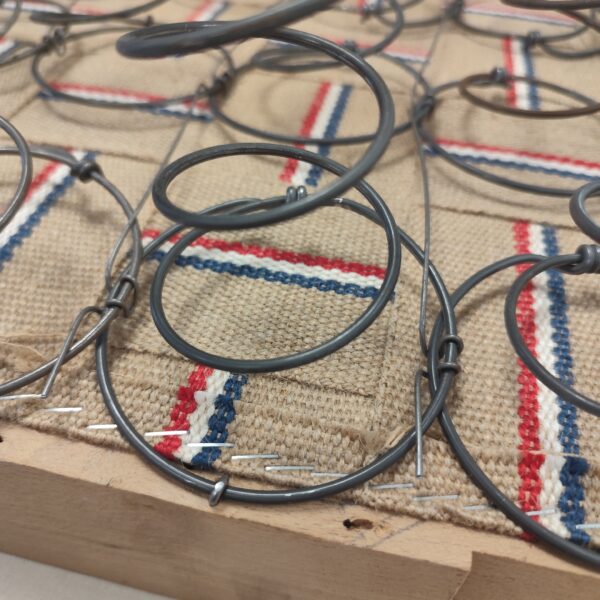
Upholstery Suppliers – Where to Buy Upholstery supplies ?
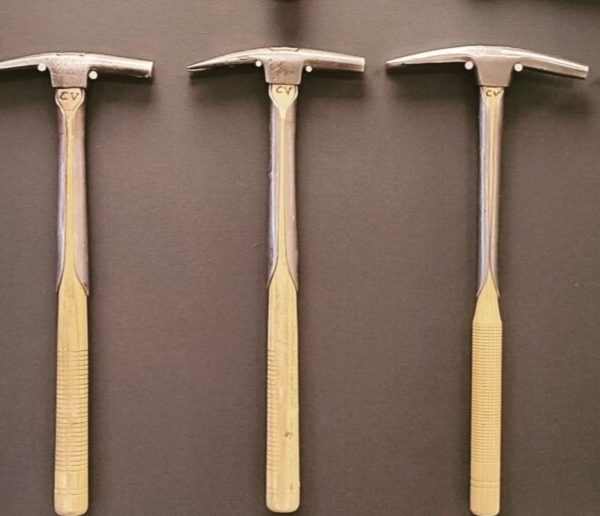
Upholstery TOOLS: The Complete Guide

Upholstery MATERIALS: The Complete Guide
Upholstery Tools, Materials and Suppliers
Upholstery tools have a beauty to them that most people never get to see. The weight of a good upholstery hammer in the hand. The satisfying click of a pneumatic staple gun finding its depth. A regulator that has been used so many times it has worn a groove exactly where your fingers rest. These are not accessories – they are the reason the work is possible, and for anyone who spends real time at a bench, they become extensions of the hands.
The materials are no different. Horsehair that has been processed and curled before it reaches your hands. Waxed spring twine that holds a knot better than anything synthetic ever will. A piece of jute webbing, properly tensioned, that will still be doing its job thirty years from now. None of this is romantic exaggeration, it is simply what you notice once you have used good materials and bad ones on the same type of project and seen what happens to each of them over time.
Tools
The toolkit of a working upholsterer is not large, but it is specific. Every tool has a job. Some of them – the staple gun, the webbing stretcher, the sewing machine are obvious. Others are less so. The regulator, for instance, is a long metal spike with a flat end that most people outside the trade have never seen. It is also the tool that a traditional upholsterer reaches for more than almost any other, because it is the only way to redistribute natural fibre filling through a layer of burlap without tearing the surface open. Without it, getting even density across a traditionally padded seat is nearly impossible.
Then there is the question of powered versus manual. A hand staple gun is perfectly adequate for occasional work on small frames. For anything larger, or for anyone doing upholstery regularly, a pneumatic gun connected to a compressor changes everything: the speed, the consistency, the physical effort over a long session. The staples themselves matter just as much as the gun: the wrong gauge, the wrong leg length, and the staple either pulls through the fabric or splits the rail.
The sewing machine deserves its own mention. Not every domestic machine is built for upholstery. Heavy fabric, multiple layers, piping cord – these put real strain on the feed mechanism and the tension system. Knowing what to look for before you buy or upgrade, and understanding which features actually matter for upholstery work versus which are irrelevant, is the kind of practical knowledge that saves a significant amount of money and frustration.
The cutting tools – shears, foam cutters, seam rippers – seem simple but reward investment. A good pair of fabric shears stays sharp for years and cuts cleanly through multiple layers without dragging. A sharp electric foam cutter produces edges that require no trimming. A quality seam ripper does not slip. These are not glamorous purchases, but they are daily-use tools, and the difference between a cheap version and a good one is felt every single time you pick them up.
Upholstery TOOLS: The Complete Guide
The full tools guide covers everything on the bench: hand tools, power tools, needles, pins, pliers, stretchers, hammers, and the specialist items that are specific to traditional or modern upholstery. With recommendations, what to avoid, and how to prioritise if you are building a toolkit progressively.
Materials
The list of materials involved in a single upholstered piece is longer than most people expect when they start out. Webbing, springs, twine, burlap, natural fibres, foam, Dacron, calico, edge roll, piping cord, gimp, bottom cloth, adhesives, fabric — and within each of those categories, multiple options with significantly different price points and significantly different performance levels. Understanding what each one does, and why the choice between them matters, is one of the most practically useful things you can learn before you start buying.
Take foam. It is easy to assume that foam is foam that a block of a given thickness and colour from one supplier is equivalent to a block that looks identical from another. It is not. Density, measured in kg/m³, determines how quickly the foam breaks down under repeated compression. A seat cushion made with 28 kg/m³ foam will feel fine for the first few months and start to collapse within a year of daily use. The same cushion made with 40 or 45 kg/m³ foam will hold its shape for years. The difference in price between the two is small. The difference in result is not.
The same logic applies to spring twine. Waxed hemp twine holds a knot, resists friction against the metal spring coil, and does not stretch under load. Synthetic twine looks similar, costs less, and degrades faster — sometimes within a few years on a heavily used seat. On a project where the spring tying alone takes three to four hours, using the wrong twine is an expensive false economy.
Natural fibres like coir, vegetable tow, horsehair,have their own learning curve. Knowing how much to use, how to distribute it evenly, and how to read the surface with your hands to find the thin spots is a skill that develops over multiple projects. But it starts with understanding what each material is, what role it plays in the build, and why layering them in a specific sequence produces a result that a single material cannot.
For modern work, the equivalent knowledge is about foam layering, Dacron wrapping, and how calico – the unsung underlayer applied before the final fabric – holds everything in place and protects the outer cover from premature wear. Small decisions, consistently made well, that add up to a result that holds.
Upholstery MATERIALS: The Complete Guide
The full materials guide covers every material used in both traditional and modern upholstery: what it is, how to choose between options, what the specifications mean in practice, and what the most common mistakes look like – so you can avoid them before they happen.
Suppliers
Sourcing is genuinely one of the harder parts of upholstery, and it is the part that gets the least attention in most guides. You can know exactly what you need – 9 gauge double cone springs at a specific height, jute webbing in a specific width, horsehair at a specific grade – and still spend hours trying to find a supplier who stocks it at a reasonable price and will sell in quantities that make sense for a single project.
The problem is that the upholstery supply market contains a wide range of quality levels, and the difference is not always visible at first glance. Cheap foam that looks identical to professional foam collapses within months. Synthetic twine that looks like spring twine stretches and slips. Thin burlap that feels similar to upholstery grade tears under stitching. General craft shops and online marketplaces stock products aimed at the DIY market, and those products are not always equivalent to what a professional workshop would use – even when they carry the same name.
Specialist upholstery suppliers – the kind that stock professional-grade materials, can advise on specifications, and understand what an upholsterer actually needs – exist in most countries, but they are not always easy to find if you do not know where to look. Building a relationship with one good supplier changes the quality and the ease of every project that follows.
Upholstery Suppliers – Where to Buy Upholstery supplies ?
The suppliers guide covers where to source materials in France, the UK and beyond – specialist upholstery suppliers, fabric showrooms, foam specialists, and online options for materials that are harder to find locally. With specific recommendations, what to ask for when you call, and how to evaluate a supplier before committing to an order.
Your Upholstery Journey in 3 clear guides
Start simple, learn the right techniques, then move to real projects. A clear method, built to last.