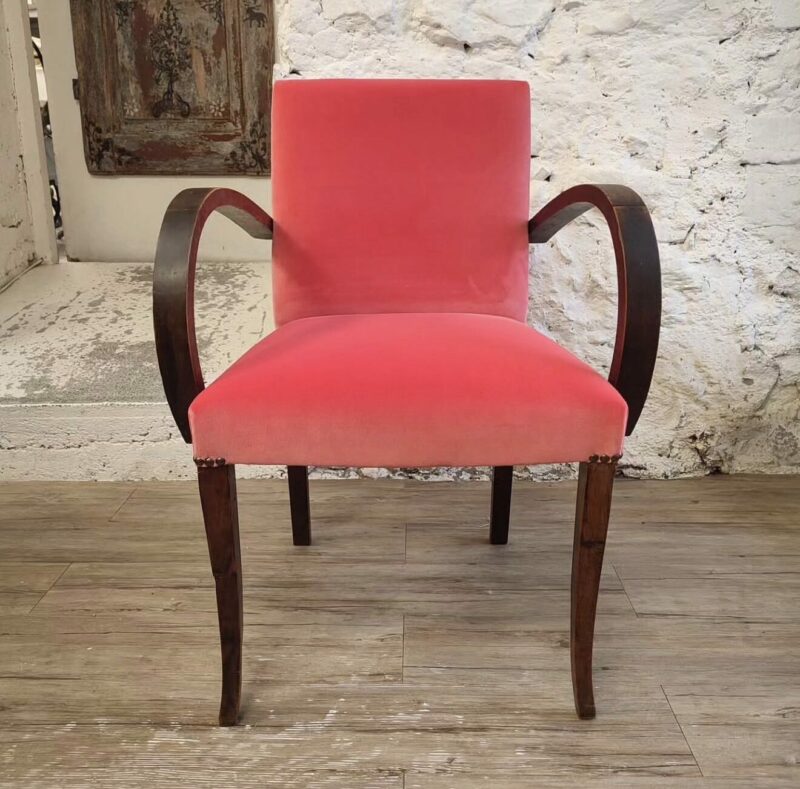
Velvet is a pile fabric: on top of the base weave, an extra set of pile yarns is woven in loops that stand up from the surface, then cut or left looped. That three-dimensional structure is what gives velvet its depth, its play with light and its strength on a seat. For upholstery, choose a true woven velvet, dense enough for the use you have in mind, from cotton for everyday comfort to mohair for the most resilient finish.
As an upholsterer, velvet is the fabric I work with the most and the one my clients ask about the most. In this guide, I explain what makes a real velvet, the different kinds, and above all how to choose and work it on a chair. It is part of my complete guide to upholstery fabric.
On this page: How velvet is made · Types by fibre · Types by technique · Is chenille velvet? · Velvet and light · Working velvet in the workshop · How to choose · FAQ
How Velvet Is Made: Warp, Weft and Pile
A plain fabric is made of two sets of yarns crossing at right angles: the warp (lengthwise) and the weft (crosswise). Velvet adds a third element: a pile warp, extra yarns woven in loops above the base fabric. These loops are either left intact (loop or uncut velvet) or cut to free the ends, which creates the soft, upright pile of a classic velvet.
This construction explains three things you will notice on every real velvet:
- Strength: the pile is anchored in the base fabric by weaving, so it resists rubbing and pulling.
- Light: the direction of the pile changes how the fabric reflects light.
- Ageing: a good velvet takes on a patina and keeps the memory of use without falling apart.
A historical reference: Genoa velvet
Woven in Italian workshops since the Middle Ages, Genoa velvet uses a double warp, one for the base and one for the pile, with loops left intact in some areas and cut in others. The contrast between matt and shiny areas draws the pattern in relief. Made of silk or wool, very dense and extremely durable, it was reserved for aristocratic chairs, wall hangings and canopies, and it remains one of the most luxurious velvets available today.
Types of Velvet by Fibre
| Velvet | Look and feel | Best for |
|---|---|---|
| Silk velvet | Unrivalled sheen and softness, sometimes fragile | Curtains, cushions, wall hangings, show chairs |
| Cotton velvet | Supple, strong, available in many weights | Everyday sofas, reading chairs, banquettes |
| Wool and mohair velvet | Warm, slightly drier touch, less shiny, ages beautifully | Chairs built to last; mohair is one of the most resilient velvets |
| Linen velvet | Dry, almost mineral touch, very discreet sheen, firm | Contemporary chairs with clean lines |
| Viscose and polyester velvet | From excellent performance velvets to poor imitations | Only with a high Martindale rating |
Cotton velvet is today’s standard for upholstery: a good balance of comfort, durability and price, and almost every fabric house has at least one 100% cotton velvet collection. Mohair velvet, a wool velvet, is among the most beautiful and the most resilient. Linen velvet needs more technique on a chair, because it is stiffer than cotton, but the result is remarkably elegant. As for synthetic velvets, sort them strictly: some performance velvets made for contract use are excellent, many cheap ones only imitate the look. Always choose them for their abrasion resistance.
Types of Velvet by Technique
- Cut-pile velvet: the pile is cut at an even height, for a smooth, uniform surface. The classic velvet.
- Loop (uncut) velvet: the loops are left intact, for a matt look and great resistance to crushing.
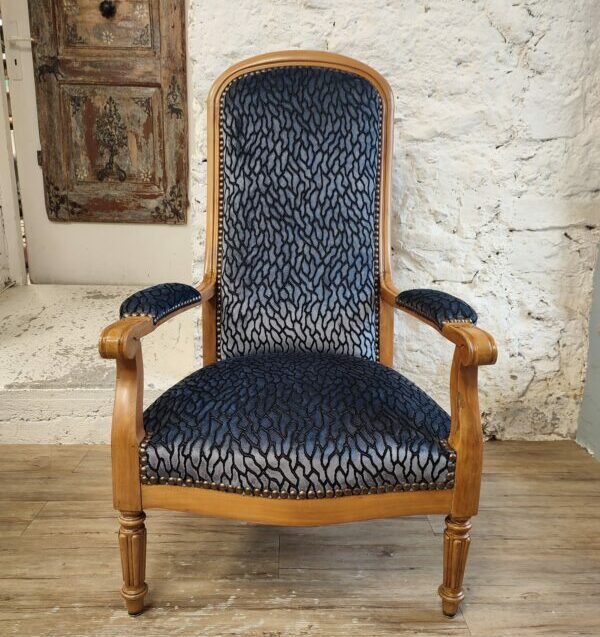
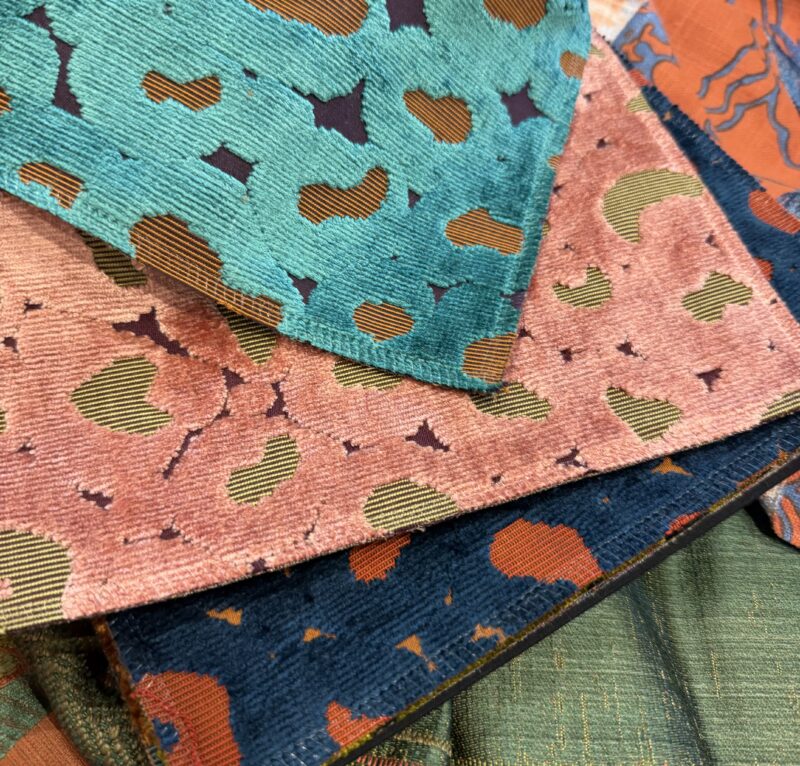
- Cut velvet (ciselé): a pattern made by combining cut and looped areas, like Genoa velvet.
- Embossed velvet (frappé): some areas of pile are pressed flat, drawing a pattern through changes in sheen.
- Corduroy: parallel ribs of pile, a firmer structure and great strength.
Printed velvet
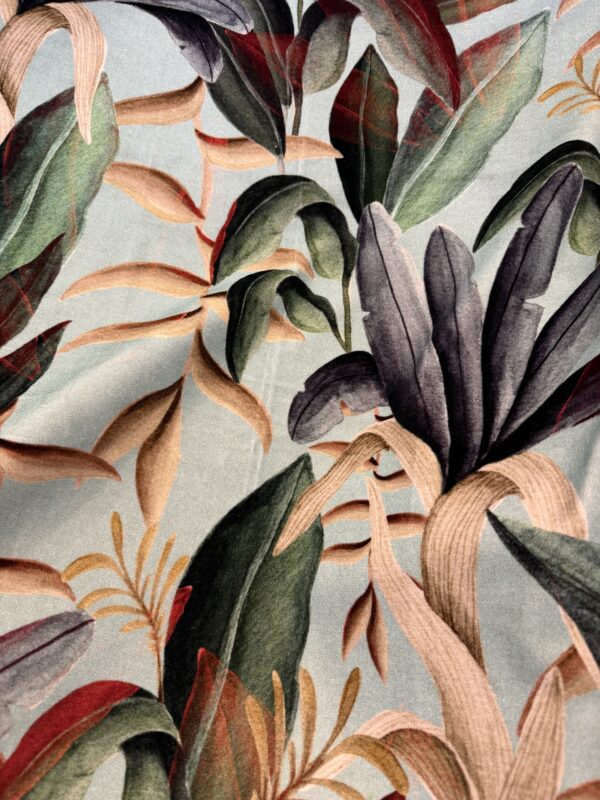
Printing on velvet is difficult, because the upright pile takes the ink unevenly. Short-pile velvets print best. On a seat, the printed pattern fades faster where you sit, as the pile crushes and wears. I keep printed velvets for decorative uses (cushions, headboards, wall panels) or occasional chairs, and choose a plain velvet for a sofa or a chair in daily use.
Is Chenille a Velvet?
Not structurally. In a chenille, the pile is not woven in as an extra warp: it is part of the yarn itself, made by twisting short fibres around a core, before weaving. The fabric is immediately soft and inviting, but its pile is less firmly anchored than a true velvet’s. It tends to crush where you sit, can pill, and does not age with the same patina.
That does not rule chenille out, but it must be chosen with care: buy it from a good upholstery fabric house, with a high Martindale rating, and know that you are not buying a velvet. For a chair meant to last for decades, a true woven velvet remains the safer choice.
Velvet and Light: Why the Pile Direction Matters
When light falls along the pile, the fibres open and the colour looks deep and rich. When it falls against the pile, the fibres act as a screen and the surface looks darker. This is not a defect: it is the signature of velvet. A velvet sofa changes with the time of day and the angle of the light.
That is why the pile direction is never left to chance. On a chair, the pile is generally run downwards, to show the most sheen from the front and limit marks from use. Every piece of the chair must follow the same direction, or the panels will look like different colours.
Working Velvet in the Workshop
Cutting
Before cutting, find the pile direction by stroking the fabric, and mark it with an arrow on the back of every piece. All the pieces must be cut in the same direction, so you cannot turn them around to save fabric: plan more fabric than for a plain weave, and check your quantity with the fabric calculator. See also how to cut the fabric.
Covering
Velvet follows curves well, but it shows every uneven tension. Keep the grain straight, tension evenly, and take extra care in the corners. A stiffer velvet, like linen velvet, needs more careful tensioning but holds its shape beautifully once in place. See the covering tutorials.
Sewing and piping
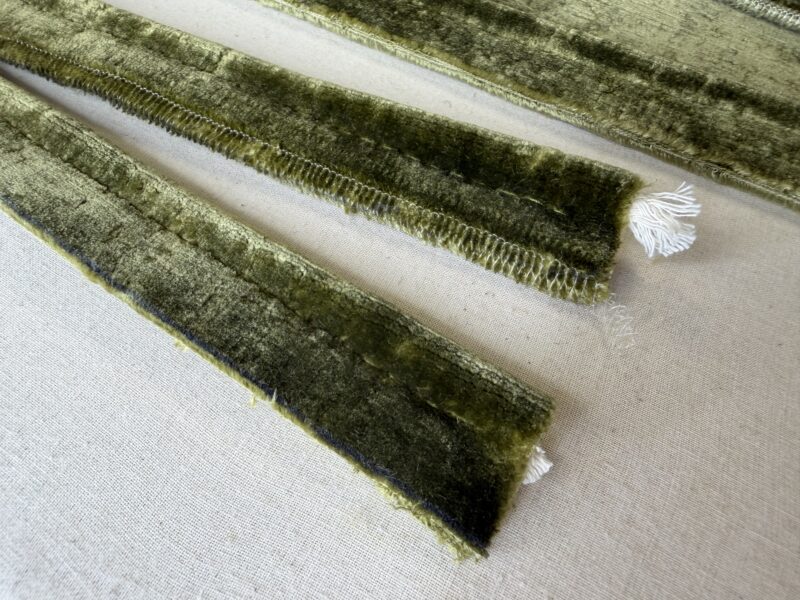
The two layers of velvet tend to slide against each other under the machine. A walking-foot or triple feed sewing machine keeps them together. Velvet makes beautiful piping, in the same colour or as a contrast: see the dark blue velvet with yellow double piping in the power of piping.
How to Choose a Velvet for Upholstery
- Weight: for a seat, look for at least 250 to 300 g/m² total weight. A light velvet crushes quickly.
- Abrasion resistance: for a chair in daily use, I recommend at least 30,000 Martindale rubs.
- Construction: turn the fabric over. A true velvet shows a distinct base weave on the back; a chenille shows the same fluffy yarn throughout.
- Use: be honest about how the chair will be used. A family sofa, an office chair and a guest-room armchair do not call for the same velvet.
- Marketing words: be wary of “ultra-soft”, “cashmere touch” or “luxury effect”. Prefer suppliers who give the composition, the weight and the test results.
- A large sample: press it, rub it and look at it in the light of the room where the chair will live.
Common mistakes
- Choosing a delicate velvet for intensive use.
- Choosing on the first touch and ignoring the weight.
- Mistaking a chenille for a woven velvet.
- Ignoring the pile direction when cutting.
- Putting a printed velvet on a chair used every day.
Where Velvet Works Best
On seats, velvet shows everything it can do: depth, comfort and noble ageing. A dense cotton velvet, well chosen and well fitted, will go through fifteen to twenty years of family life. It is also a classic for the loose cushion of a leather club chair. On walls and curtains, it brings colour depth and absorbs sound, and on headboards it adds warmth and quiet to a bedroom.
Velvet Upholstery: Frequently Asked Questions
Is velvet good for upholstery?
Yes. A true woven velvet is one of the strongest upholstery fabrics, because its pile is anchored in the base weave. Choose it dense enough, and with a high enough Martindale rating, for the use you have in mind.
What is cut velvet?
Cut velvet, or ciselé velvet, combines cut and looped pile areas to draw a pattern in relief. Genoa velvet is the historical example.
What is mohair velvet?
A wool velvet made with mohair, the hair of the Angora goat. Less shiny than cotton, it is warm, ages beautifully and is one of the most resilient velvets for upholstery.
Which way should the pile go on a chair?
Generally downwards, for the most sheen seen from the front and fewer marks from use. Above all, every piece of the chair must follow the same direction.
Is chenille a velvet?
Not structurally: its pile is part of the yarn, not woven in as an extra warp. A good-quality chenille from a reputable fabric house can work on a chair, but it does not age like a true velvet.
Written by Céline Vanier, upholsterer trained with the Compagnons du Devoir, working in her atelier near Lake Annecy, France, since 2012.