Piping is a small detail with a huge effect: change its colour, and the same fabric tells a completely different story. Here are real chairs from my workshop and my students’ work, to show you how to play with piping colour and contrast.
Piping is one of the different ways to finish a chair. Not sure whether your chair needs single or double piping? Both are explained in the piping tutorial. On this page, we focus on what makes piping so powerful: colour.
Same Fabric, Different Piping
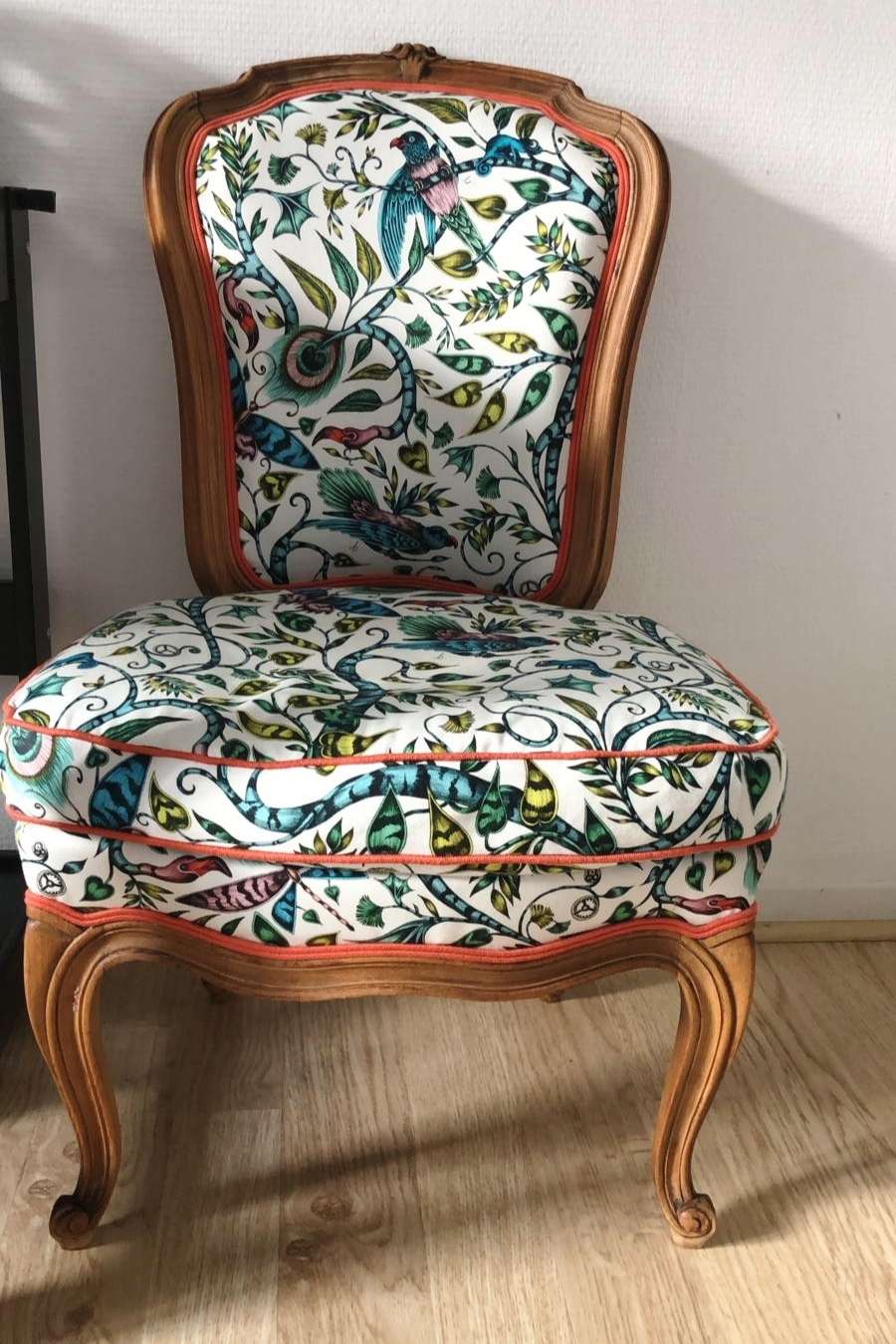
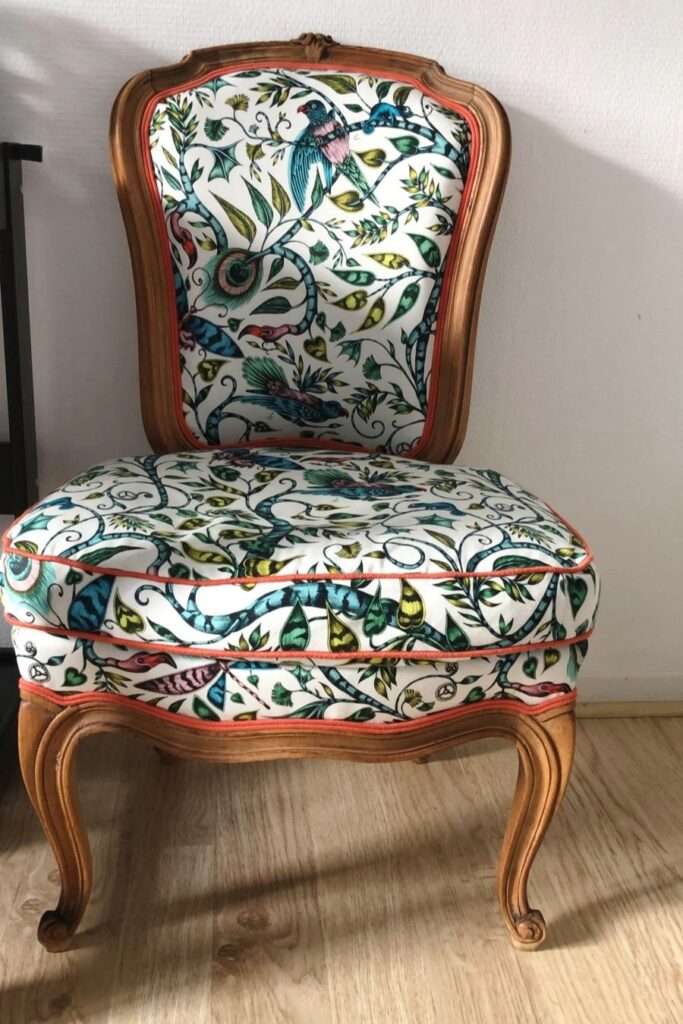
Look at these two chairs my students upholstered with exactly the same fabric. Only the piping colour changes, and each chair has its own personality. Both options are great.
Option 1: coral piping
The coral picks up the warm tones of the birds and flowers in the pattern. Used as double piping along the wood of the back and as fine piping on the seat, it warms up the whole chair.
Option 2: turquoise piping
The cold turquoise brings a fresh touch and makes the blue and green patterns pop. Same fabric, a completely different mood.
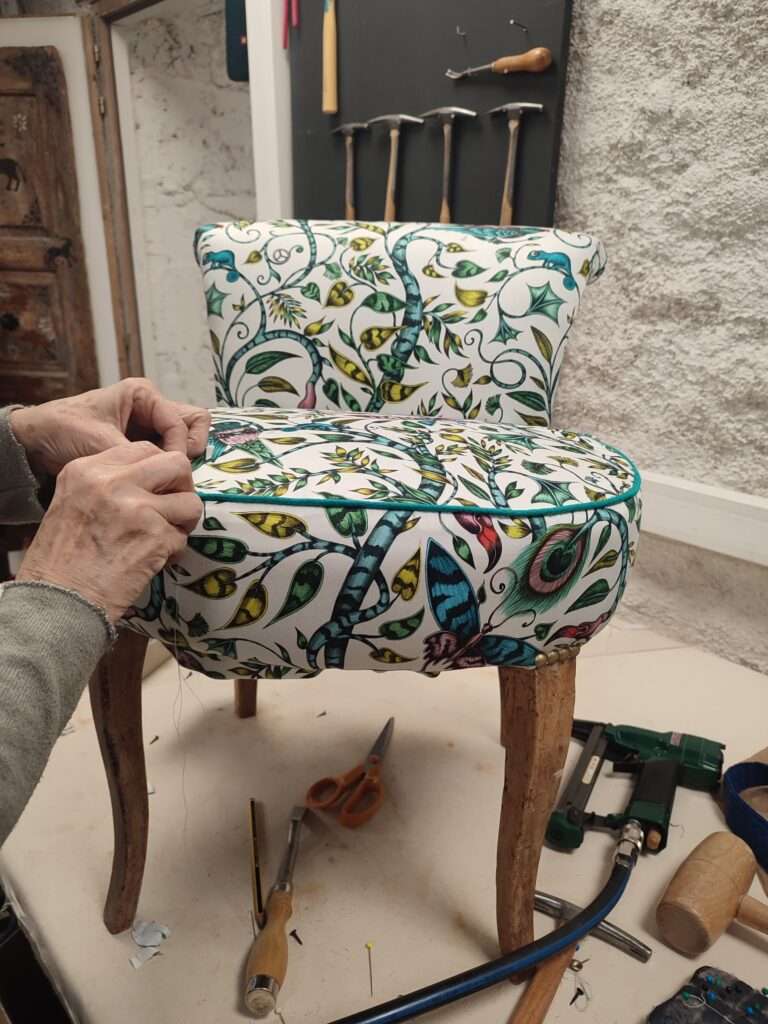
You love this fabric? It is a design by Clarke & Clarke.
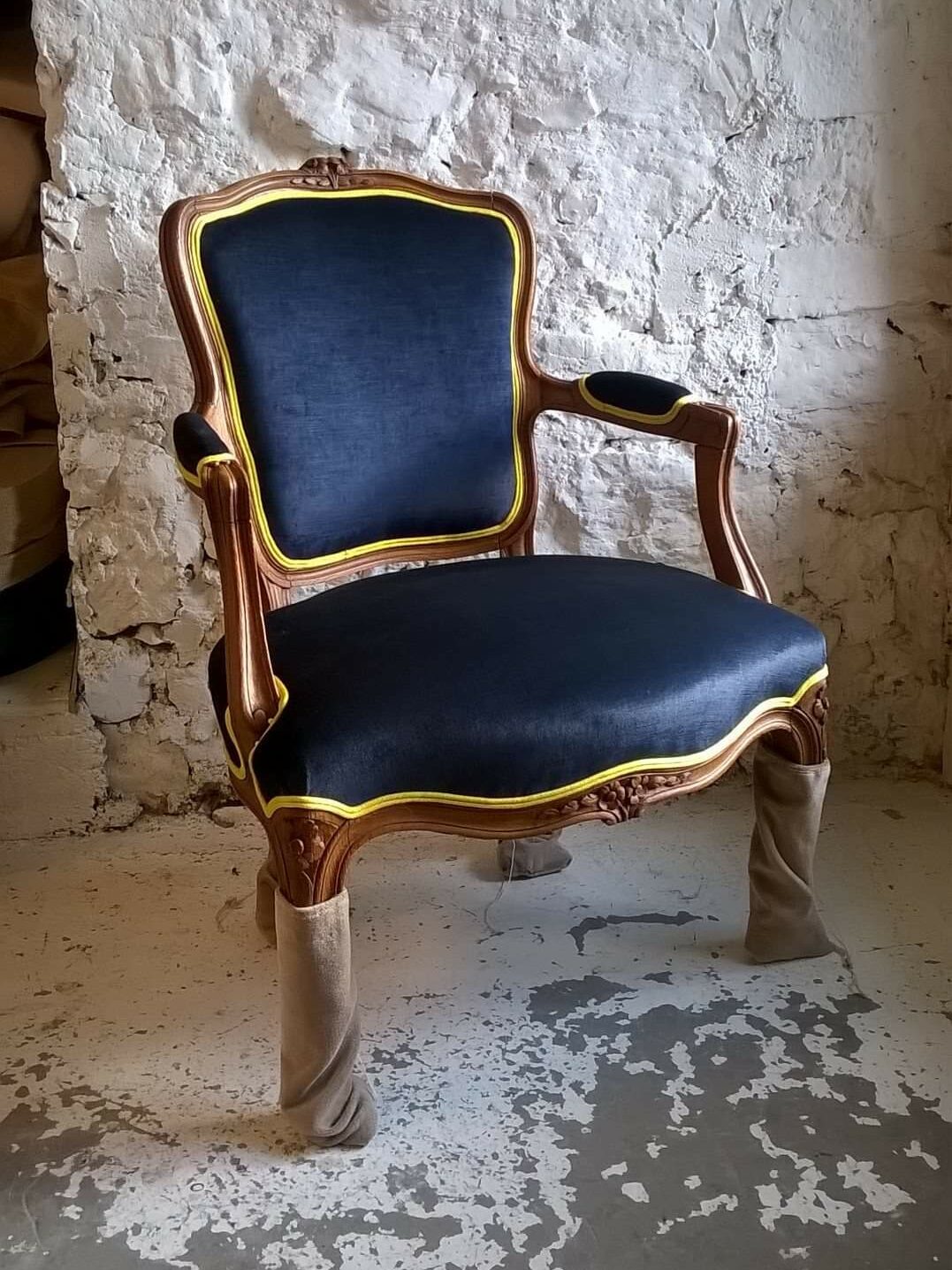
Strong Contrast Piping
For a bold, modern look, choose a piping colour that has nothing in common with the fabric. Here, a dark blue velvet meets a bright yellow double piping on a Louis XV cabriolet chair: the piping redraws the whole outline of the chair.
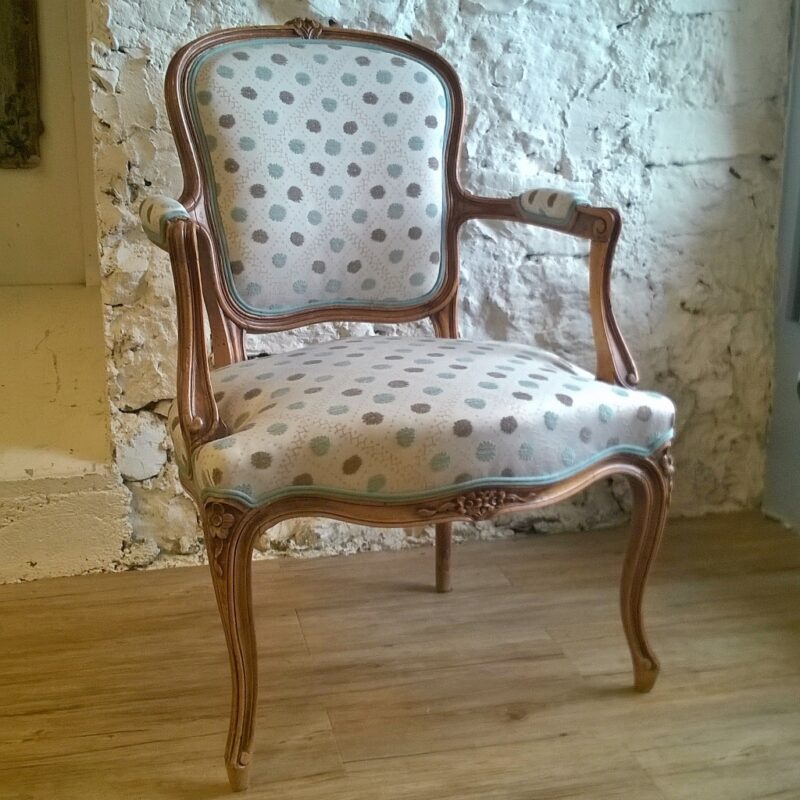
Soft Contrast Piping
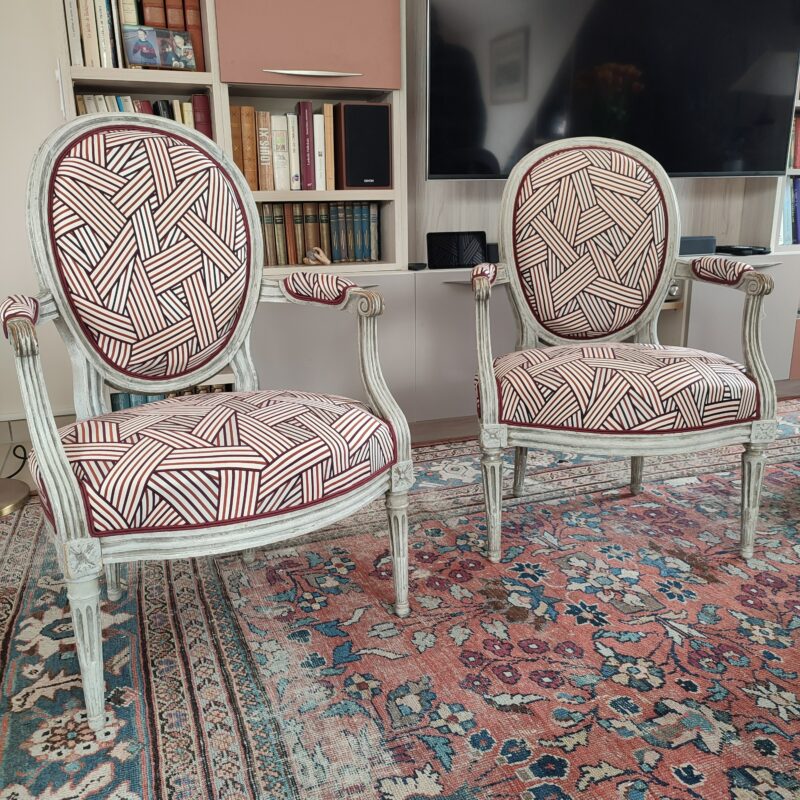
For a more subtle result, pick the darkest colour in the pattern. On these Louis XVI medallion armchairs, a burgundy double piping echoes the stripes of the fabric: it frames the seat, the back and the arm pads without competing with the pattern.
Piping That Draws the Silhouette
Piping is not only for the edges along the wood. Sewn between two pieces of fabric, on the outside back or around the arms, it follows the lines of the chair and underlines its shape. On this armchair, a thin burgundy piping picks up the small motif of the fabric and draws the curve of the back and arms.
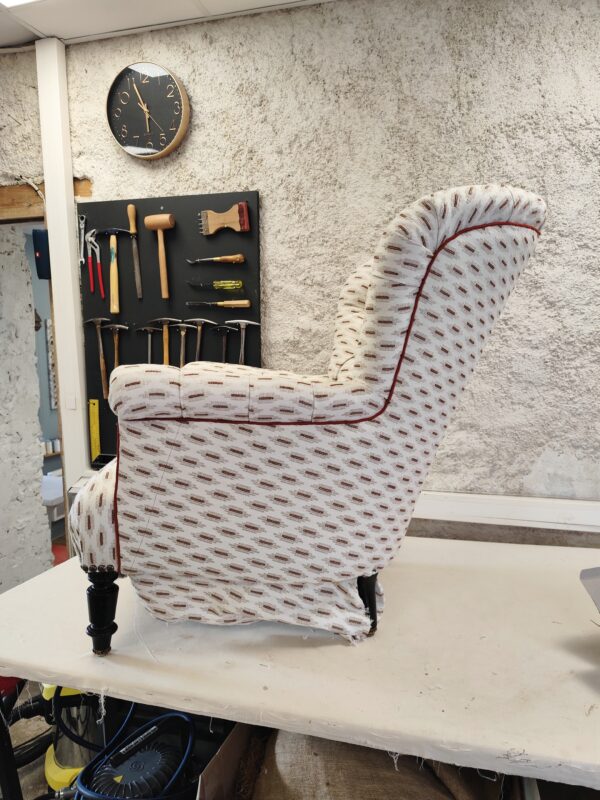
A chair with a loose seat cushion, like a bergère, often combines both: double piping along the wood, and single piping around the cushion.
How to Choose Your Piping Colour
- Pick a colour from the pattern for a harmonious result: it ties the piping to the fabric.
- Go darker for a soft contrast that frames the chair without stealing the show.
- Choose an opposite colour for a strong, graphic contrast, especially on a plain fabric or a velvet.
- Test it first: lay a strip of the piping fabric along the edge of the chair before you sew. The effect is always stronger than you expect.
Make or Buy Your Piping?
You can make your piping yourself, in the same fabric or a contrasting one: see how to make upholstery piping step by step. You can also buy ready-made single and double piping from general upholstery suppliers and trimmings specialists. Then see how to start attaching piping and decorative nails if you prefer another finish.
Written by Céline Vanier, upholsterer trained with the Compagnons du Devoir, working in her atelier near Lake Annecy, France, since 2012.