
From Webbing to Covering: Every Upholstery Technique Explained
Every upholstered piece is built in the same order: strip and prepare the frame, web the base, add springs if needed, build the padding, cover it with fabric, then finish the details. Sewing comes in alongside, whenever the project calls for cushions, piping or sewn panels. This guide explains each of these steps and where it fits.
Maybe you’ve completed a first upholstery project already. You know what the layers look like. Now it’s time to understand why traditional and modern upholstery techniques work the way they do, and how to make the right decision at every step.
These aren’t isolated skills. They’re a sequence. Each technique prepares the next, and understanding why each step exists changes how you approach every project after this. Use this page as your map: come back whenever you need to find a technique or see where it fits in the process.
New to upholstery? Start with Guide 1: Upholstery for Beginners.
Jump to a step: Prepare · Webbing · Springs · Padding · Covering · Finishing · Sewing
Step 0: Strip and Prepare
Every upholstery project starts here, without exception. Before you rebuild anything, you need to understand how the piece was made, what holds it together, what has failed, and how to rebuild it.
How do you strip upholstery properly? You work in reverse order of how the piece was built, removing each layer carefully and keeping it intact when possible. The old fabric becomes a template. Staple and tack positions mark the original tension lines. What you find underneath, frame joints, webbing, springs, tells you exactly what needs replacing.
This is also the stage that separates careful upholsterers from rushed ones. Beginners who skip it almost always pay for it later, with uneven padding, covers that pull, or seats that don’t hold their shape.
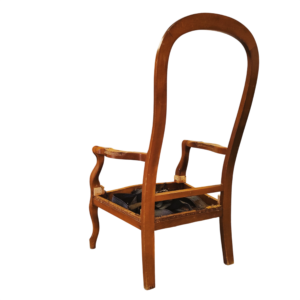
Preparing a Chair Frame for Upholstery: Stripping, Repairing and Finishing the Wood
Step 1: Upholstery Webbing
Webbing is the foundation of any upholstered seat. Springs, padding and fabric all sit on top of it: if the webbing is wrong, everything built on it is compromised from the start.
What does upholstery webbing do? It creates a tensioned base across the frame that spreads the weight evenly and supports everything that comes next. Webbing that is too loose will sag. Webbing that crosses incorrectly creates pressure points. These mistakes often go unnoticed until months later, when the seat starts to fail.
Traditional jute webbing, interlaced and hand-tensioned, is the standard for classic and high-quality furniture. Elastic webbing is found in modern frames and has its own fixing logic. Knowing when to use each one is one of the most useful skills in upholstery.
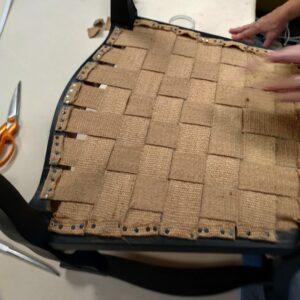
Upholstery techniques tutorials for webbing
Step 2: Upholstery Springs
Springs bring structure, support and resilience to a seat. They are not just about bounce: they are about balance, stability, and how a piece feels after years of use.
Traditional hand-tied coil springs are set into the webbing, tied in a precise pattern and compressed to the right height. They take more time and skill, but give a seat that moves evenly and keeps its shape for decades. This is the method used in antique and high-quality period furniture.
Spring units, sinuous springs, zig-zag springs and bonnell units, come pre-assembled and are fixed directly to the frame. They are faster to install and found in most contemporary furniture. Not a lesser option: a different tool, for different frames.
The real skill is reading a piece and choosing accordingly, and mixing approaches when the project calls for it: a hand-tied spring deck under a modern foam pad, or a contemporary frame hand-tied because its original unit has failed.
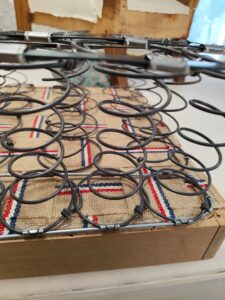
Upholstery techniques tutorials for SPRINGS
Step 3: Upholstery Padding
Padding is where comfort and shape are built. The choices you make here decide how a seat feels, how it looks, and how long it keeps its form.
Traditional padding uses natural materials: horsehair, vegetable fibre, cotton felt. They breathe, compress differently from foam, and let you build volume and shape entirely by hand, with bridle ties and layering methods refined over centuries. For period furniture, it is often the only approach that respects the piece.
Modern padding centres on foam, but foam is not one thing. Density, firmness, thickness and layering all change the result. Choosing the right foam, cutting it cleanly and layering it with Dacron or felt takes real practice.
A good upholsterer knows both well enough to combine them: horsehair over a foam base, cotton felt under a modern cover. These combinations are not compromises, they are solutions.
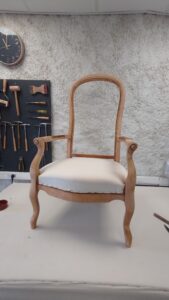
Complete Padding and Stuffing Tutorials for Upholstery Projects
Step 4: Upholstery Covering
This is where all the previous work becomes visible. Covering is not about pulling fabric tight and hoping for the best: it is about method, sequence and precision.
How do you cover upholstery professionally? You work in a set order, from the centre outward, balancing the tension in both directions before fixing anything permanently. Corners are folded, not bunched. Curves are eased, not forced. Calico undercovers, pleats, mitred corners and chair backs all have their own method.
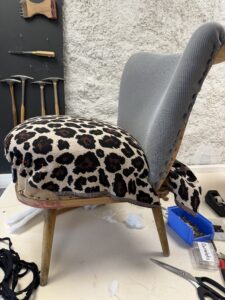
Upholstery techniques tutorials for COVERING
Step 5: Upholstery Finishing
Finishing closes the piece. Braid, gimp, double welting, decorative nails and bottom cloth hide the fixings, protect the edges and give the piece its final character. Most people don’t notice these details when they are done right, but everyone notices when they are wrong.
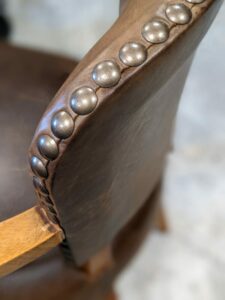
Upholstery techniques tutorials for finishing
Alongside: Sewing for Upholstery
Sewing is not a stage of its own: it comes in whenever a project needs it. Cushion covers, box cushions, piping, loose covers, hand stitching to close a back: the quality of the sewing directly affects the quality of the finished piece.
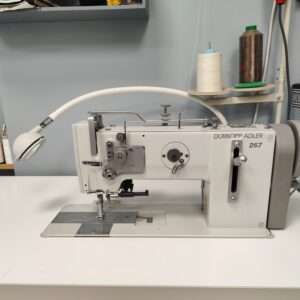
Upholstery techniques tutorials for SEWING
Upholstery Techniques: Frequently Asked Questions
What is the correct order of upholstery steps?
Strip and prepare the frame, then webbing, springs (if the piece has them), padding, covering and finishing. Sewing happens alongside, when the project needs cushions, piping or sewn panels.
Should I learn traditional or modern upholstery?
Both. Traditional techniques teach you how a seat really works; modern techniques are faster and suit contemporary frames. Knowing both lets you choose the right approach for each piece, and combine them when it makes sense.
Does every chair need springs?
No. Many chairs, stools and drop-in seats are built without springs, with webbing and padding only. Springs are found on deeper seats and armchairs, where they add comfort and resilience.
What Comes Next?
Once these techniques are clear, following full projects becomes much easier. The steps connect, and you stop asking why a step exists: you see how it fits into the whole.
Guide 3 puts all of this to work on complete pieces: stools, cushions, headboards, chairs and armchairs. Real projects from start to finish, in order of complexity.
Still unsure about the basics? Go back to Guide 1: Upholstery for Beginners.
Your Upholstery Journey in 3 clear guides
Start simple, learn the right techniques, then move to real projects. A clear method, built to last.
Ready to Learn Properly?
A clear learning path, professional methods, and no more guessing: every tutorial is filmed step by step in my workshop, on real pieces. The Hammer Club is where it starts.
Is a Technique Missing?
As a guest or a member, you can suggest future tutorials in the comments below. If a technique or a chair style is missing from the platform, leave your request here: your idea could inspire the next tutorial.