
Sewing for Upholstery: Cushions, Covers and Hand Stitching
Sewing and covering go hand in hand. Many upholstery projects require work at the sewing machine before anything goes on the chair: cushion covers, seat panels, piped seams. The quality of the sewing directly affects the quality of the finished piece. A badly sewn cushion cover will never sit right, no matter how well the padding underneath was built.
Sewing in upholstery is not fashion sewing. It is about precision, durability and volume: you are building three-dimensional shapes that hold under tension and last for years. This page gives you an overview of every sewing technique and links to the full step-by-step tutorials inside the membership.
Looking for complete sewn projects rather than techniques? See Cushions & Sewing Projects.
Cushion Covers and Seat Cushions
A well-made cushion cover is harder than it looks. The fit needs to be precise, the corners clean, and the zip positioned and sewn so that it disappears into the overall look. Too loose and the cushion looks sloppy. Too tight and it will not go on without a fight, or will split at the seams within months.
How to sew a simple cushion cover
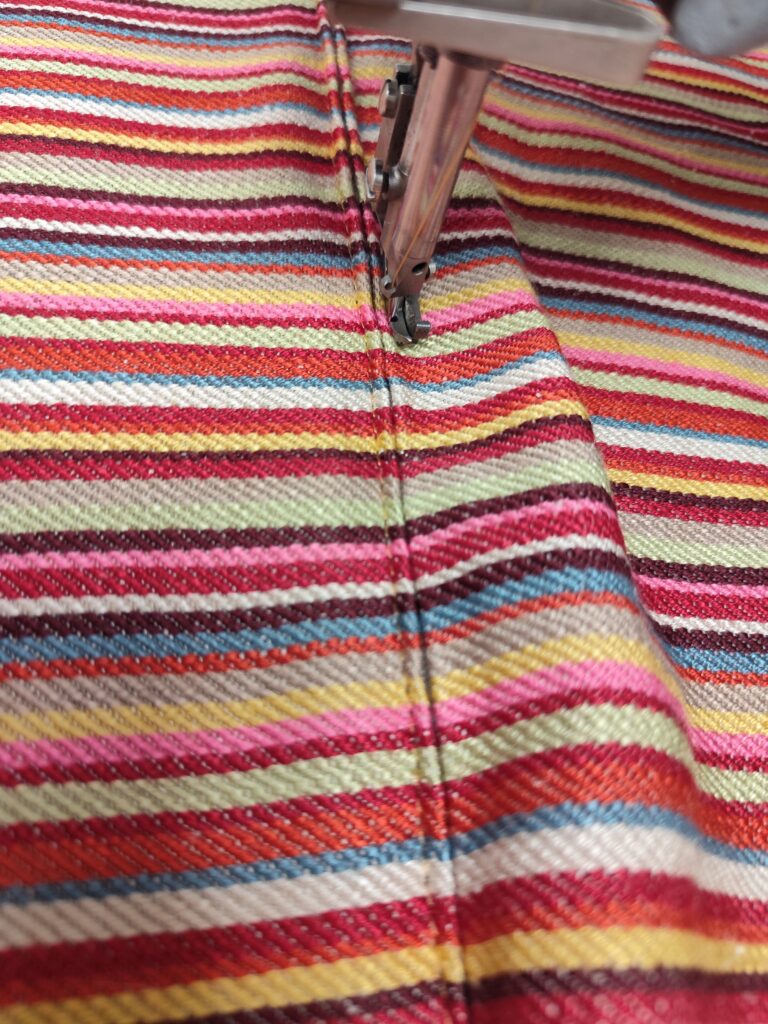
Simple cushion cover tutorial
How to sew a box cushion
The box cushion is one of the basic sewing skills you need for many seat cushions. In this example, a box cushion with velcro underneath for a wooden bench.
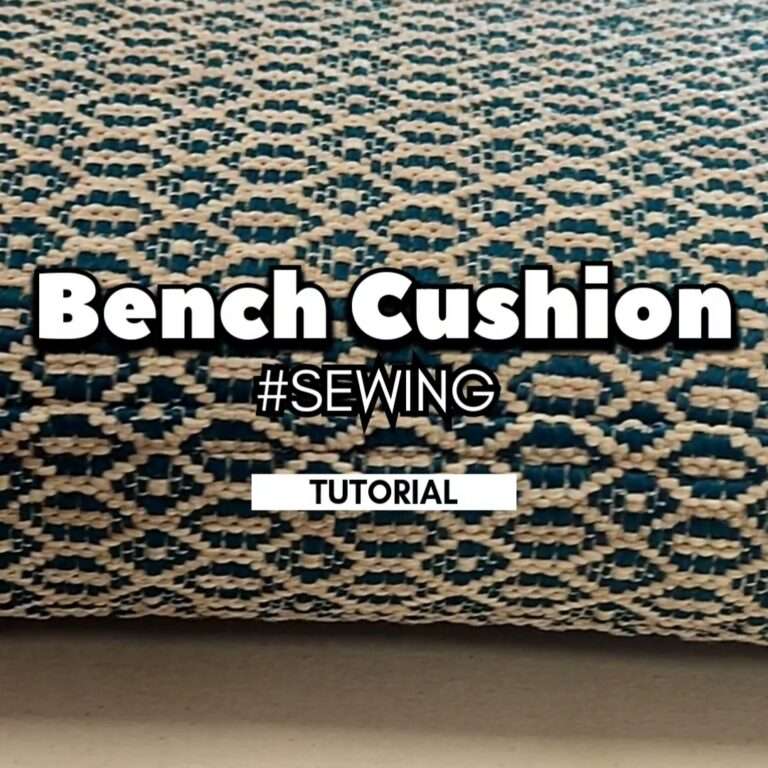
How to sew a bench boxed cushion
How to sew a bergère seat cushion
A more specific project: the cushion is shaped to fit inside the frame of the chair, with constraints on all sides that make the cutting and sewing more precise than a standard square cushion.
Full tutorial: how to sew a perfect seat cushion for a bergère chair
How to make a feather seat cushion
A feather cushion needs a specific internal construction to stop the feathers escaping and keep its shape: the sewing is as much about containment as it is about finish.
Modern cushion chair
On a modern cushioned chair, the cover construction and the chair covering work together as one process.
How to Sew Piping
Piping instantly elevates a cushion or a chair. It defines edges, adds structure and signals quality, but only when it is sewn correctly. Uneven piping, a badly joined cord or a corner that pulls the wrong way draws the eye for all the wrong reasons. Discover why it matters in the power of piping.
Full tutorial: 9 steps to sew a decorative cushion with piping cord
Loose Covers
Loose covers are a world of their own: fitted, removable covers that need to follow the shape of the piece without looking baggy or sliding around. The sewing is precise and unforgiving, and a few professional habits make the whole process easier and more consistent.
Full tutorial: 5 professional sewing tips for loose covers
Hand Sewing in Upholstery
Hand sewing is an essential skill: for closing backs, for repairs, for adjustments, and anywhere a machine cannot reach. A clean, even stitch that disappears into the fabric takes a little practice, then becomes completely natural.
Full tutorial: how to hand sew in upholstery
Top stitching
Top stitching is the hand stitch used to close the back of a chair or join two fabric edges on the piece itself, without any visible fixing. It is the finishing stitch of upholstery, and doing it well turns a competent job into a professional one.
Invisible stitching on a square corner
To close a square corner by hand with no visible fixing, see the invisible stitching tutorial in the Covering techniques.
Buttons
Knotting a button properly makes a real difference to the finished look, and it is easier to get wrong than most people expect. A badly knotted button works loose, pulls unevenly, or creates tension across the fabric that was never intended.
Full tutorial: how to knot a button, with my apprentice
Sewing: Frequently Asked Questions
Do I need a special sewing machine for upholstery?
A standard domestic machine struggles with thick upholstery fabrics, piping and several layers. A machine with a walking foot, or an industrial machine, makes a real difference. See my tools guides before buying.
What thread should I use for upholstery?
A strong polyester or bonded nylon thread, heavier than for dressmaking, so the seams hold under tension and wear.
How do I sew piping around a corner?
Cut the piping fabric on the true bias so it can stretch, and notch the seam allowance at the corner so the piping turns cleanly without puckering.
What Comes Next?
→ Covering
Seats, backs, arms, corners and pleats: fitting the fabric on the piece.
→ Finishing
Braid, double welting and decorative nails: the final layer.
See all the steps in Guide 2: Core Upholstery Techniques, or complete sewn projects in Guide 3.
Your Upholstery Journey in 3 clear guides
Start simple, learn the right techniques, then move to real projects. A clear method, built to last.
All of these techniques, and many more, are available in full detail inside the Hammer Club. Every tutorial is filmed step by step in my workshop, on real pieces, so you can follow along at your own pace, pause, rewind, and come back whenever you need a refresher.