From Family Heirloom to Showpiece: Reupholstering a Rush Seat Chair That Wasn’t Meant to Be Upholstered
Some chairs arrive at the workshop with a straightforward brief. Strip it, rebuild it, cover it. Clean and simple. And then there are the ones that arrive with a whole story tucked into their joints and their worn-out finish. This rustic wooden armchair was very much the second kind.
The client had grown up with this chair. It had been in the family for years, one of those pieces of furniture that quietly becomes part of the backdrop of childhood memories. The kind of chair you don’t really see anymore because it has always just been there, at the kitchen table, in the corner of a room, somewhere familiar. By the time it made its way to the workshop, it wasn’t in great shape, but that didn’t matter. What mattered was that it meant something. And that changes everything about how you approach the work.
This is something I come back to again and again in this craft. Upholstery is not just about fabric and foam and technique. It’s about giving objects a second life, and sometimes that second life carries the weight of something much more precious than the chair itself. Knowing that a piece is loved makes you more careful, more considered. It raises the standard in the best possible way.
What We Were Actually Working With
When a chair like this arrives, the first thing you do is assess. And what we found under the surface told quite a story of its own.
This is a classic rustic wooden armchair, the kind you find across France and throughout Europe, often in farmhouses, old dining rooms, country kitchens. They are sturdy, unpretentious, and built to last. The seat is traditionally made with rush weaving, a natural and freebeautiful technique that gives the chair its character. The small wooden armrests are one of the things that make this style so charming and so practical for everyday sitting.
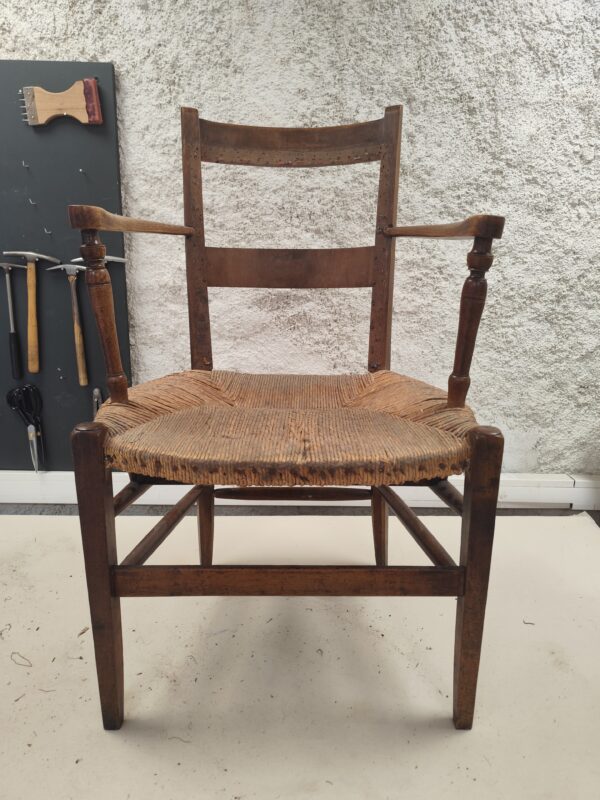
They also, as any upholsterer will tell you, make recovering the seat considerably more complicated, because you have to work your fabric all the way around the back of the armrests and into the sides. Nothing impossible, but it requires patience and a very precise approach.
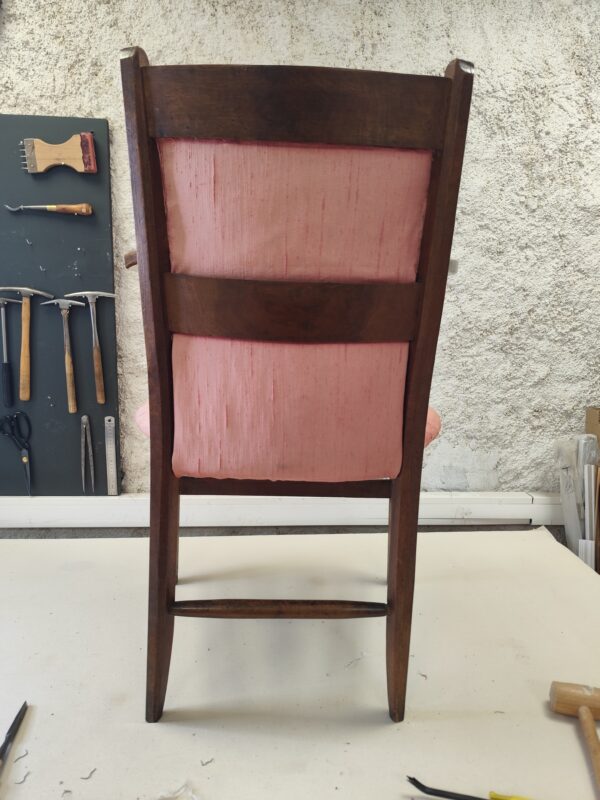
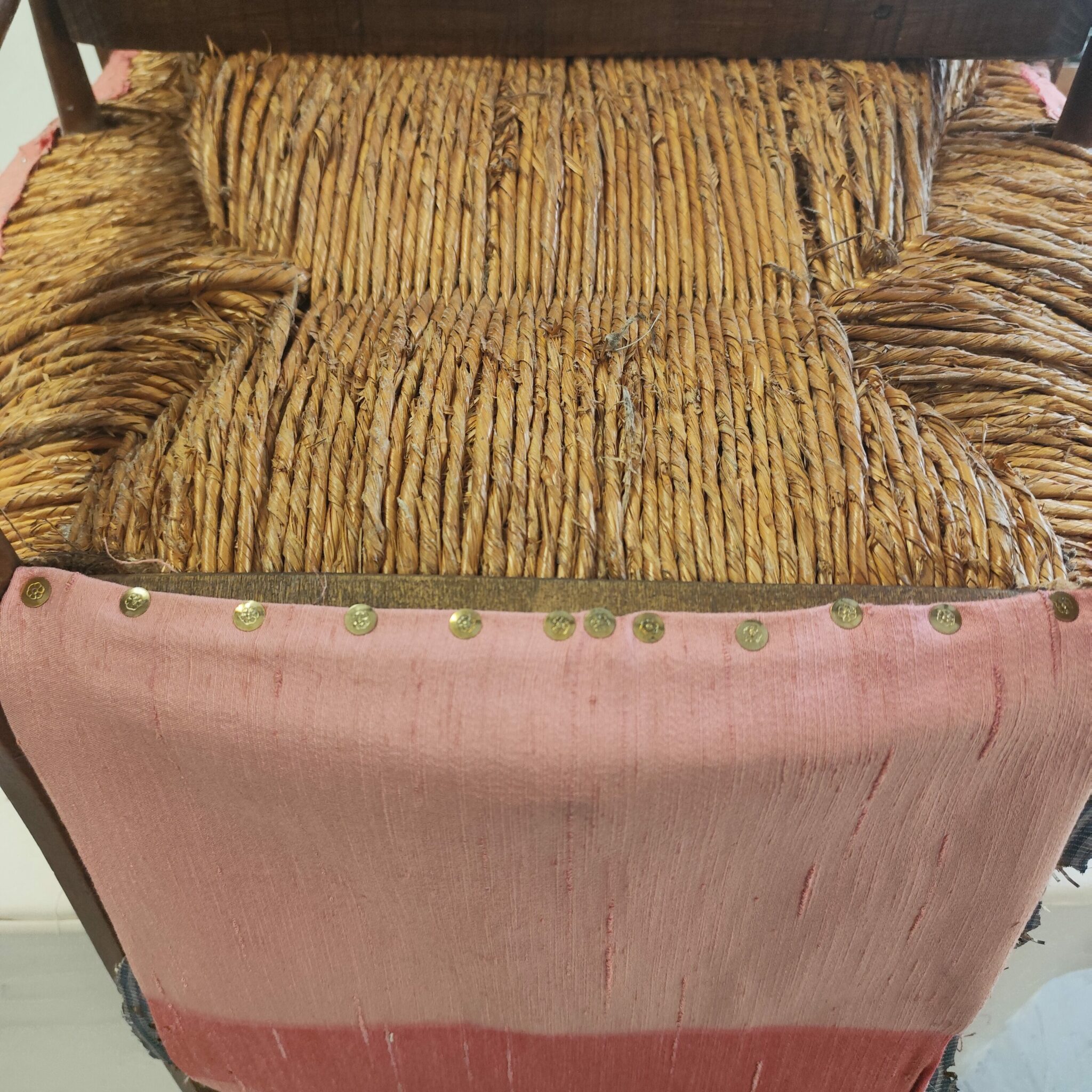
The seat of this chair had already been tampered with before it came to us. Someone, clearly with some upholstery knowledge but perhaps not quite enough, had decided to add padding on top of the original rush weaving. The result was a mix of fibre and kapok, which is a natural cotton fibre filling used in traditional upholstery, topped with a layer of foam and a piece of fabric thrown over the whole thing. It wasn’t a disaster, but it wasn’t right either.
The backrest had also been covered, which it was never originally designed to be. The finish there was rough, held together with a trim that had no business being on this style of chair. It was the kind of quick fix that works for a while and then starts to look exactly like what it is.
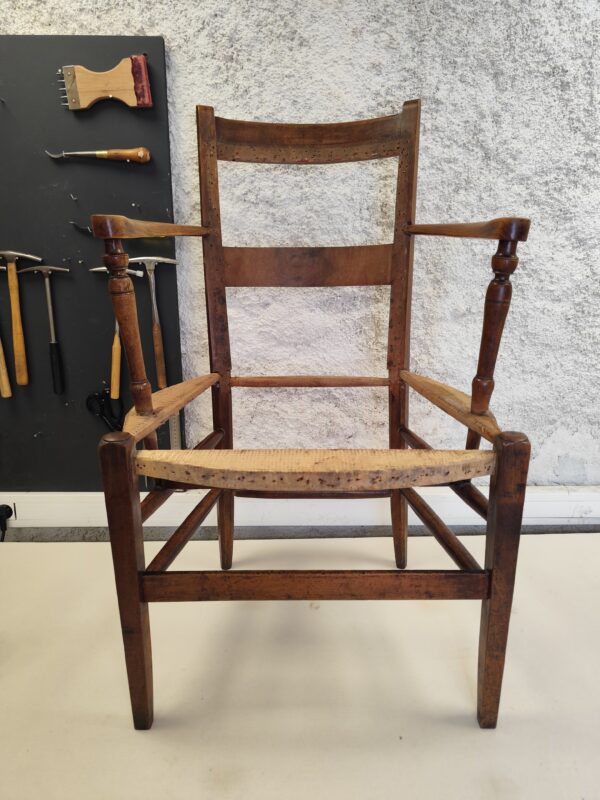
Before we could do anything beautiful, we had to undo all of that and get back to a bare frame. A solid, honest starting point. That is always the right move, even when it means more work.
Rebuilding From the Ground Up
Starting from a bare frame is one of those things that separates a proper restoration from a patch job. It takes longer. It requires more materials. But the result is something that will last, something you can be proud of, and something the client will feel the difference in every single time they sit down.
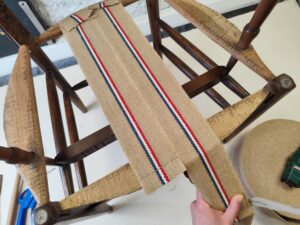
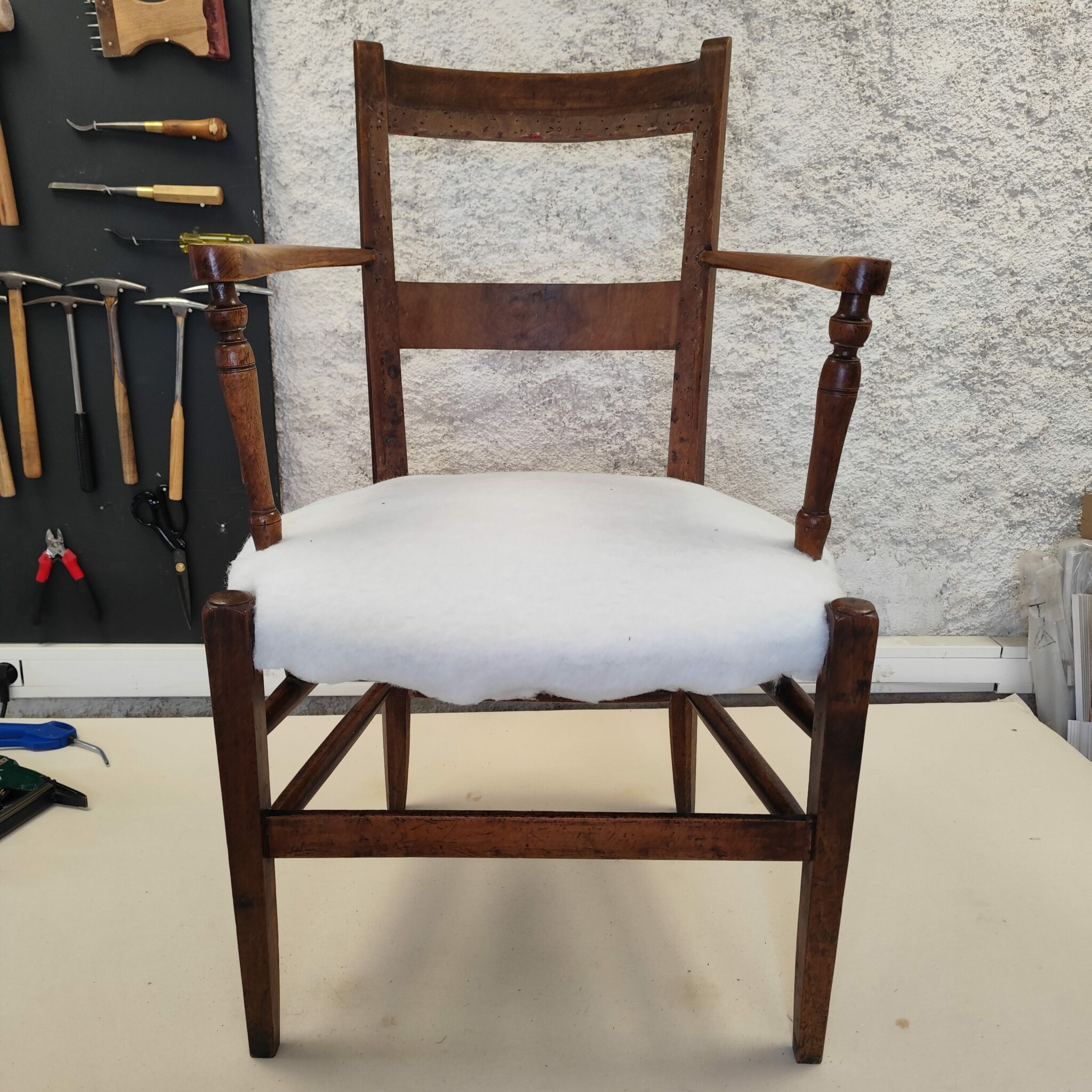
For the seat, we combined jute webbing with layers of foam, which is a mix of traditional and modern techniques that I find works beautifully on this type of chair. The jute webbing creates a strong, flexible base, the kind that has been used in upholstery for centuries because it simply works. The foam layers on top give a generous, comfortable seat that feels welcoming without losing its shape. It’s the best of both worlds: the durability of the old ways and the comfort of contemporary materials.
The backrest was rebuilt properly too, finally looking like it belongs on the chair rather than being an afterthought someone added on a Sunday afternoon.
The Armrest Challenge and How We Finished It
Those small wooden armrests are, as I mentioned, part of what makes this chair so lovely. They are also where the fabric finish can go very wrong very quickly.
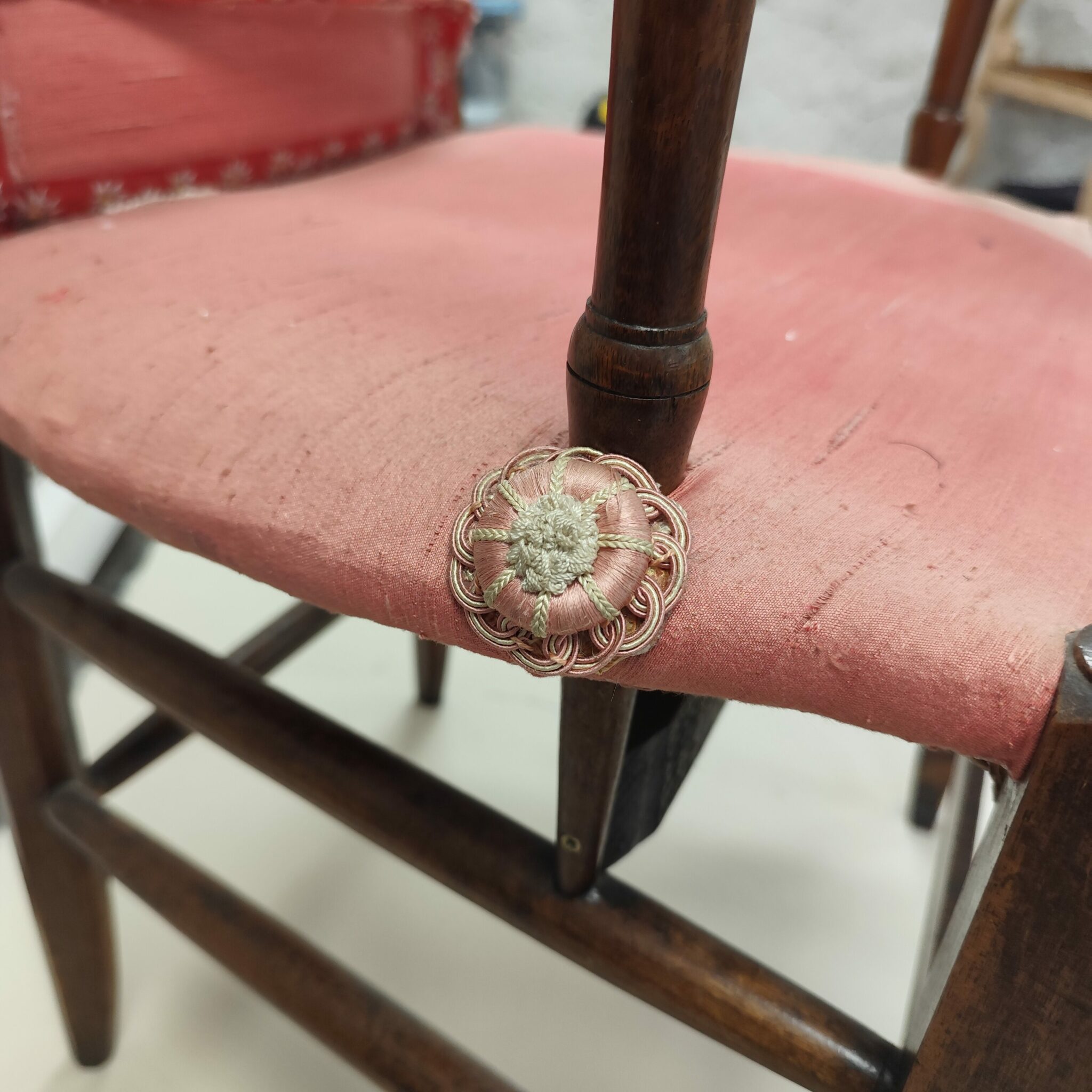
The previous work had hidden the fabric join on the sides with a “cartisane”, a passementerie detail that was completely out of place on a rustic farmhouse chair like this one. It looked added on, because it was. For this restoration, we went in a completely different direction and used a piecing technique instead.
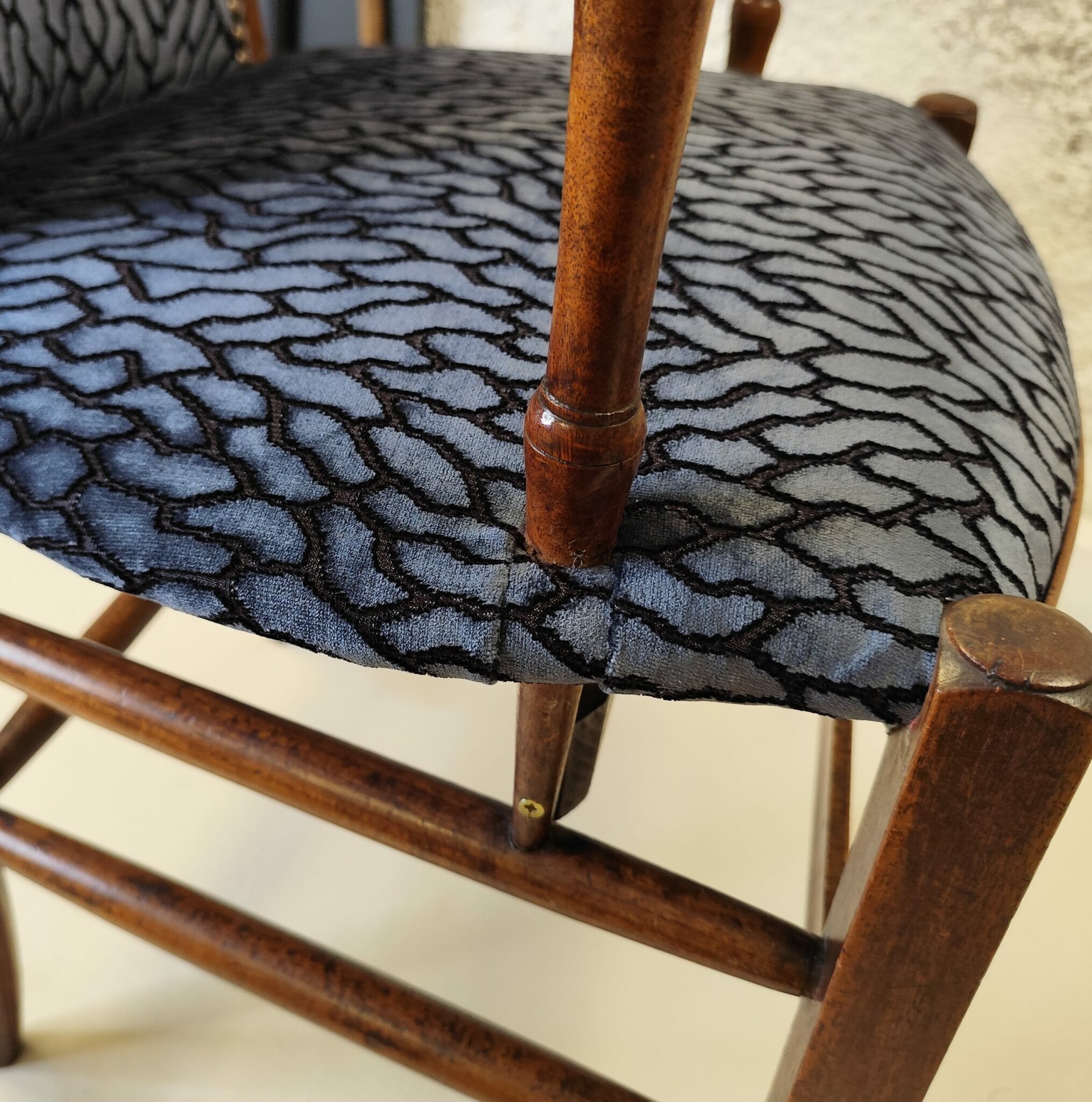
This is a hand-sewn fabric join that sits clean and flat against the wood, no extra decoration, no trim to draw the eye. Just careful, precise handwork that lets the fabric and the chair speak for themselves. It’s one of those finishing details that you might not notice at first glance, but that you absolutely would notice if it were done badly.
The Fabric: When the Right Choice Makes Everything Click
Choosing fabric for a piece like this is one of the most enjoyable parts of the process, and also one of the most important. You want something that honours the chair’s character while giving it that renewed energy, that sense of arrival.
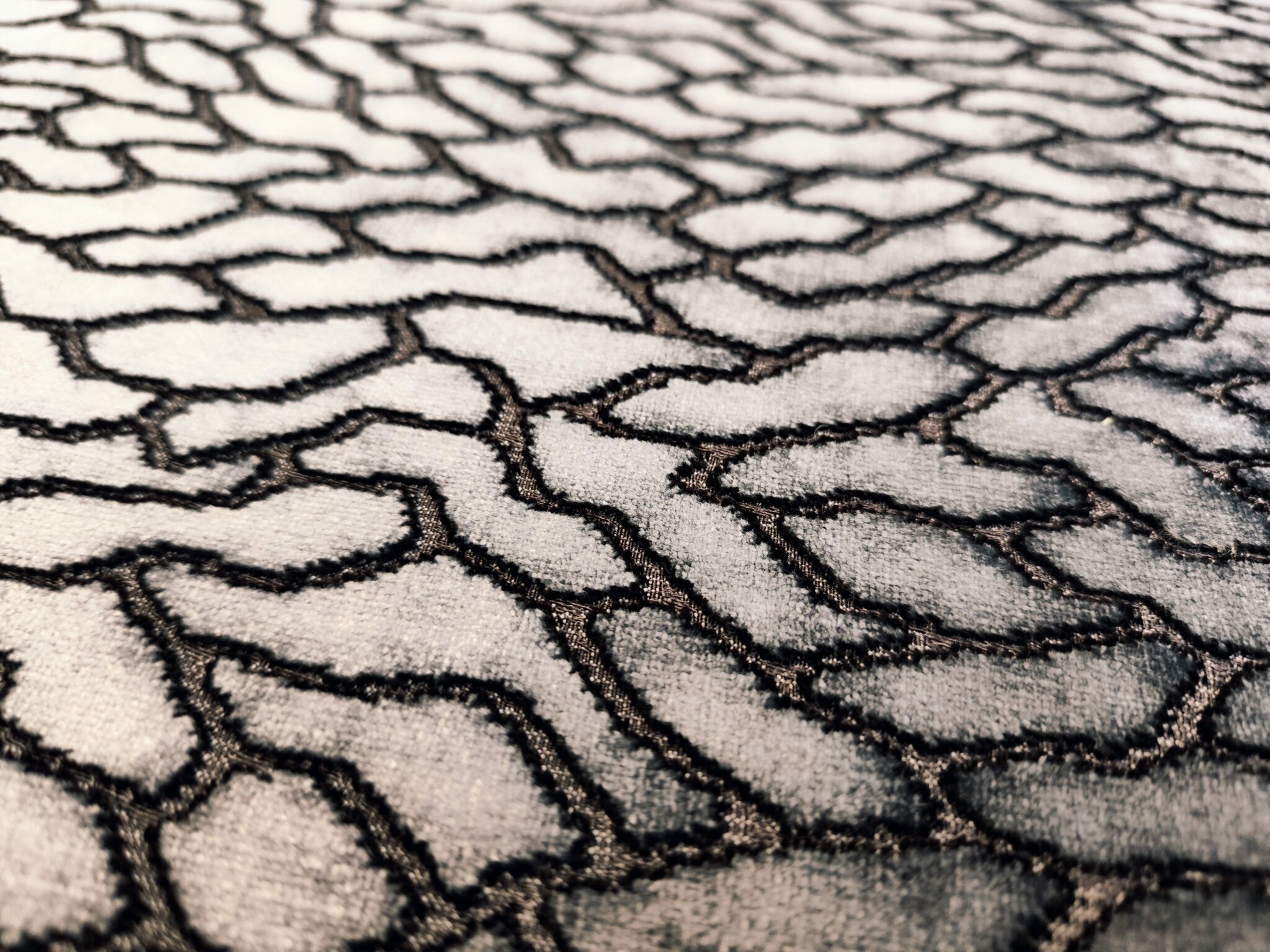
For this project, we went with a fancy viscose velvet from Black Edition, one of the great high-end upholstery fabric houses whose work I genuinely admire. This particular velvet has a beautiful depth to it, with a pattern that is decorative without being overwhelming. Viscose velvet is a pleasure to work with when you know its quirks: it has a direction, it catches light in the most gorgeous way, and it rewards careful handling.
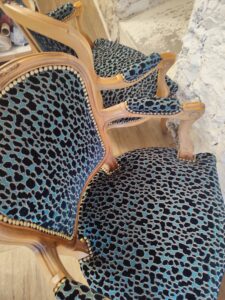
What I love about a fancy velvet like this one is how versatile it is. It works on a rustic farmhouse chair like this one just as naturally as it would on a Voltaire armchair or a cabriolet. That kind of fabric is rare, the kind that somehow feels at home in a country kitchen and in an elegant drawing room at the same time. It’s a testament to how a strong pattern and a rich texture can transcend style categories entirely.
The Full Picture
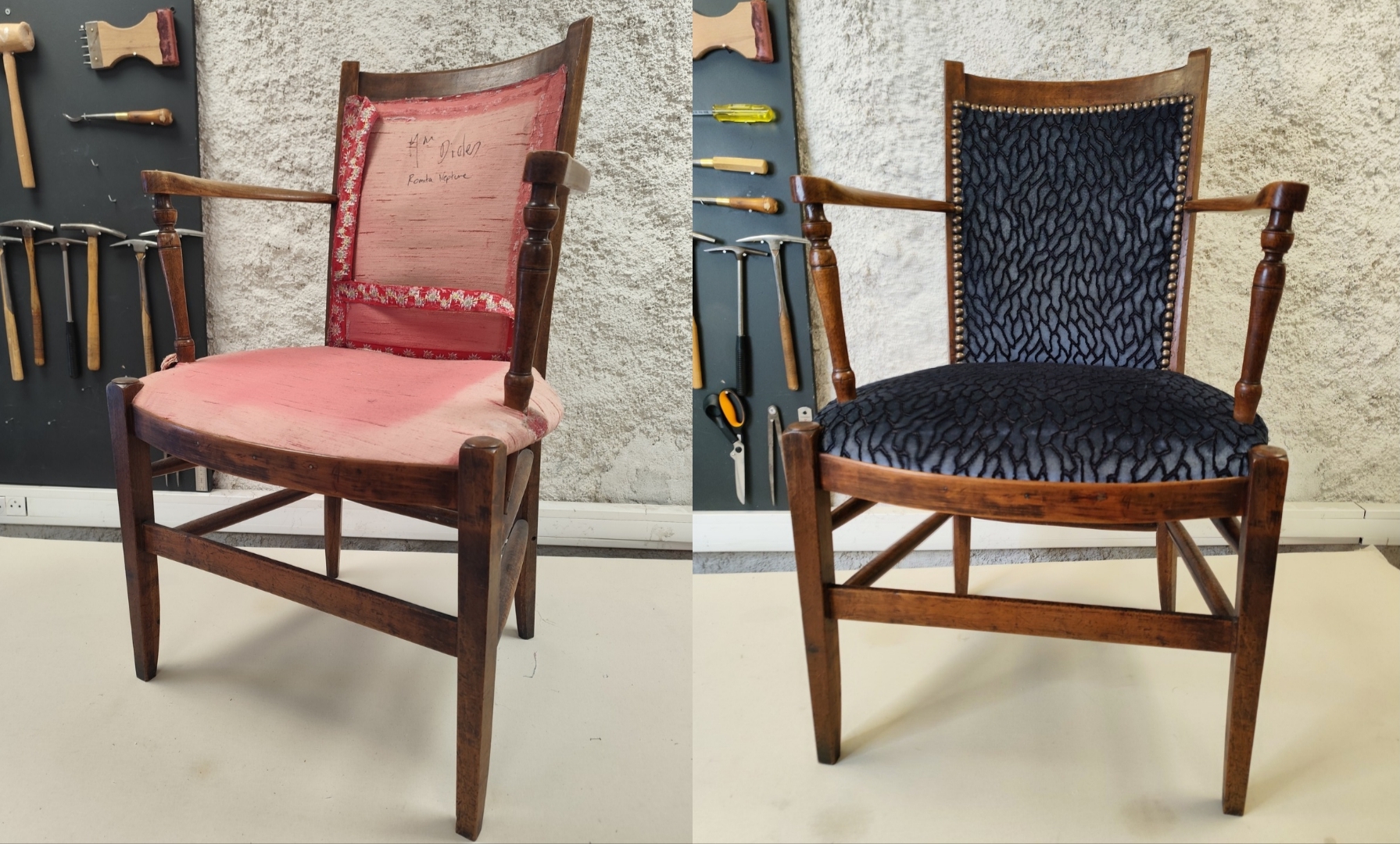
What this chair looked like when it arrived and what it looks like now are two very different things. Not just visually, though the transformation is striking. But in terms of what it is now: a solid, well-built, properly finished piece that will last for years and that carries its family history forward into a new chapter.
The full step-by-step tutorial for this restoration is available on the tutorial site, walking through every stage of the process from the bare frame to the final hand-sewn finish. If you are working on a similar chair or curious about the techniques involved, that is the place to go deep.
For now, this chair is home. And that, more than anything, is what this work is about.